Skip to content
personpersonAlex MurdaughAlex MurdaughSouth Carolina attorney convicted of killing his wife, Maggie, and son, Paul, at the family's Moselle property and sentenced to two consecutive life terms.← All People
DefendantDefense

Alex Murdaugh

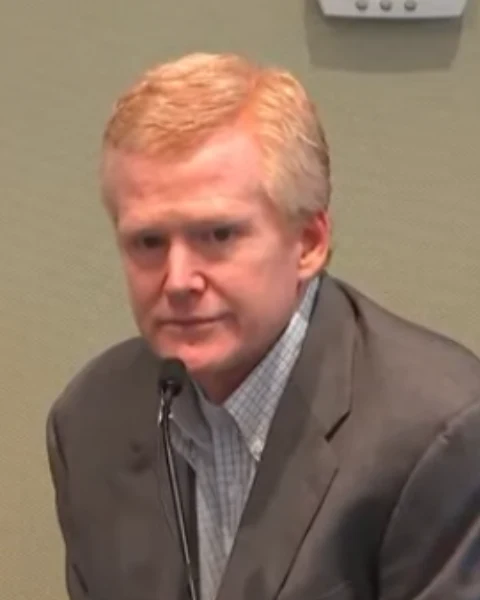
Courtroom still of Alex Murdaugh.

South Carolina attorney convicted of killing his wife, Maggie, and son, Paul, at the family's Moselle property and sentenced to two consecutive life terms.

2,089 lines·195 proceedings·189 mentions

About

Alex Murdaugh faced two murder charges arising from the deaths of Maggie and Paul Murdaugh and two related weapon-possession charges. He pleaded not guilty. The State accused him of committing the shootings at the Moselle kennels, while the defense denied that he was the shooter and challenged the investigation and the circumstantial case.

The State's theory focused on the kennel video placing Murdaugh with Maggie and Paul shortly before their phones stopped showing active use, along with phone and vehicle timing, family firearms and ammunition, his earlier accounts of the evening, and financial pressure offered as motive evidence. The defense emphasized that the weapons were not recovered, human blood was not detected on his clothing, gunshot residue could not be dated to a particular event, and aspects of the scene investigation and projectile evidence allowed other shooting scenarios. These disputes made Murdaugh's location, timeline, and changing account of the kennels central issues at trial.

Before Murdaugh testified, the defense sought limits on questioning about financial misconduct, but the court refused to issue a blanket advance restriction. After the court explained his right to testify or remain silent, Murdaugh said he understood and chose to take the stand. During cross-examination, he admitted extensive thefts and discussed his opioid addiction, acknowledged that law enforcement, partners, and friends first heard him openly admit his kennel presence during the trial, and continued to deny killing Maggie and Paul, manufacturing an alibi, or trying to influence witnesses' accounts.

On Day 28, the jury returned unanimous guilty verdicts on both murder charges and both weapon-possession charges, and the court denied the defense's motion to set aside the verdict. On Day 29, Murdaugh maintained his innocence. The court imposed a life sentence for each murder, ordered the sentences to run consecutively, and imposed no sentence on the weapon-possession charges because the murder sentences were life terms.

Trial Record (195)

20232023 Murder TrialJan 23, 2023 – Mar 3, 2023Called by defense

Alex Murdaugh stood trial on two murder charges and two related weapon-possession charges, testified that he had been at the kennels but denied killing Maggie and Paul or manufacturing an alibi, and was found guilty on all four counts on Day 28. On Day 29, the court imposed two consecutive life sentences for the murders.

Jury Selection Day 2

ProceduralOpening Court Proceedings1highlightMentioned1line spoken

Summary

Judge Newman opened qualification of Jury Panel Four, explained the accusations, plea, presumption of innocence, and burden of proof, and had the panel sworn for roll call.

Mentioned in this proceeding.

Highlights (1)

procedural actionJudge Newman identified Alex Murdaugh, summarized the murder accusations and not-guilty plea, explained the presumption of innocence and the State's burden of proof, and proceeded to the panel's oath and roll call.Open in transcript →Watch this moment ▶

Day 3

Day 4

Day 5

CrossLaura Rutland - CrossLaura RutlandJim GriffinMentioned

Summary

Jim Griffin challenged the initial Moselle investigation, eliciting limits in Rutland's visual observations and interview questions while examining the search warrant, unidentified boot prints, consent searches, and the investigation's initial suspect assessment.

Mentioned in this proceeding.

Day 6

Day 7

CrossJeff Croft - CrossJeff CroftJim GriffinMentioned

Summary

Croft faced cross-examination about the limited connection between recovered Moselle firearms and the homicide evidence, gaps in searches and evidence handling, and his disputed interpretation of Alex Murdaugh's recorded words.

Mentioned in this proceeding.

CrossJohn Bedingfield - CrossJohn BedingfieldJim GriffinMentioned

Summary

Bedingfield distinguished the three Murdaugh .300 Blackout rifles, acknowledged limits in his component-source recollection, described the caliber as commercially available and commonly used for hog hunting, and gave favorable testimony about Alex Murdaugh's relationship with his sons.

Mentioned in this proceeding.

Day 8

DirectBritt Dove - DirectBritt DoveJohn B. Conrad2highlightsMentioned

Summary

Britt Dove detailed apparent missing calls and activity gaps on Alex Murdaugh's phone, traced Paul Murdaugh's final recorded phone use, and authenticated the kennel video's time and location metadata.

Mentioned in this proceeding.

Highlights (2)

testimony highlightAlex Murdaugh's phone and extraction reports were admitted. Dove testified that older calls remained while several June 7 calls reflected on Maggie's phone were absent from Alex's log, indicating apparent removal, although he could not determine when or how the calls disappeared.Open in transcript →Watch this moment ▶
testimony highlightDove reviewed Alex Murdaugh's messages and recorded steps, including an approximately hour-long gap in recorded steps between 8:09 and 9:02 p.m. and family-group messages received at 8:31 p.m. but not marked read until the next day.Open in transcript →Watch this moment ▶
CrossBritt Dove - CrossBritt DovePhillip D. BarberMentioned

Summary

The defense used Britt Dove's phone records to argue that Alex and Maggie Murdaugh's phones were moving separately, while Dove resisted identifying an orientation change as proof the phone was thrown and acknowledged that cached GPS data may have been overwritten.

Mentioned in this proceeding.

Day 9

Day 10

ProceduralIn-Camera Witness and Privilege IssuesMentioned

Summary

The State sought permission to investigate statements allegedly made by Alex Murdaugh at a June 10 gathering, while the defense objected that the request was unauthorized discovery; the Court requested briefing and deferred a privilege ruling.

Mentioned in this proceeding.

Day 11

CrossMark Tinsley - CrossMark TinsleyPhillip D. BarberMentioned

Summary

Defense counsel tested the immediacy and scope of the financial pressure facing Alex Murdaugh. Mark Tinsley conceded that June 10 would not itself have been a reckoning but maintained that disclosure of financial information could have begun exposing irregularities.

Mentioned in this proceeding.

RedirectMark Tinsley - RedirectMark TinsleyCreighton WatersMentioned

Summary

Mark Tinsley explained why he sought institutional financial records, described settlement options involving property and a payment plan, and said additional liability theories were already under discussion. The court then addressed privilege limits for anticipated third-party testimony.

Mentioned in this proceeding.

ProceduralRaincoat-Evidence ArgumentMentioned

Summary

The defense challenged the foundation for anticipated gunshot-residue testimony about Exhibit 226, while the State argued that witness and recovery testimony supplied a sufficient chain. The court adjourned without an express ruling.

Mentioned in this proceeding.

Day 12

DirectMegan Fletcher - DirectMegan FletcherJohn MeadorsMentioned

Summary

Megan Fletcher reported GSR particles on clothing submitted as Alex Murdaugh's, his hands, a seatbelt buckle, and both sides of a blue rain jacket, while explaining that the testing generally could not distinguish discharge, proximity, or transfer or determine when residue reached an item.

Mentioned in this proceeding.

Day 13

CrossMegan Fletcher - CrossMegan FletcherJim Griffin1highlightMentioned

Summary

Megan Fletcher agreed that gunshot residue can persist and transfer, could not date or identify the source of particles on the seatbelt buckle or blue rain jacket, and explained why a related blue tarp was not tested.

Mentioned in this proceeding.

Highlights (1)

admissionAfter correcting counsel's statement that no residue was found on Alex Murdaugh's hands, Fletcher confirmed one particle on his right hand and said that result was consistent with prior possession of a firearm.Open in transcript →Watch this moment ▶
ProceduralExhibit 441 Admissibility Argument and RulingMentioned

Summary

The court admitted State's Exhibit 441 as a party-opponent statement, offered a rehabilitation-related redaction that the defense declined, denied a renewed motion to strike the financial evidence, and declined to repeat a limiting instruction at that juncture.

Mentioned in this proceeding.

Day 14

Day 15

DirectMatthew Wild - DirectMatthew WildJohn B. ConradMentioned

Summary

Matthew Wild mapped Paul, Maggie, and Alex Murdaugh's phones using call records, device data, and drive tests, while stressing that the records did not identify who held a device. He found the 911 call compatible with a Moselle location despite its use of a Varnville-area tower and traced Alex's phone through Almeda-, Summerville-, and Hampton-area sectors from June 8-15.

Mentioned in this proceeding.

CrossMatthew Wild - CrossMatthew WildPhillip D. BarberMentioned

Summary

Matthew Wild identified limits in the Verizon maps, including missing text-message location data, unrecorded tower handoffs, no relevant GPS data for Maggie or Alex, and no phone-movement comparison. He also clarified the 911 timestamp difference, the report's June 15 endpoint, and the limited scope of his confirmed third-party phone review.

Mentioned in this proceeding.

Day 16

CrossSara Zapata - CrossSara ZapataPhillip D. BarberMentioned

Summary

Zapata acknowledged low-level foreign male DNA under Margaret Murdaugh's fingernails, explained why it was not suitable for CODIS, and defended the limits of DNA-source conclusions while confirming negative Hematrace results from the sampled white T-shirt items.

Mentioned in this proceeding.

Day 17

CrossCarson Burney - CrossCarson BurneyJim GriffinMentioned

Summary

The defense narrowed Carson Burney's June 7 analysis to liquid assets and outstanding loans, while Burney maintained that borrowing was needed to repay the Chris Wilson fees and traced about $500,000 of the reviewed $792,000 to Curtis Eddie Smith.

Mentioned in this proceeding.

DirectMarian Proctor - DirectMarian ProctorCreighton WatersMentioned

Summary

Marian Proctor recounted Maggie's final June 7 call about returning from Edisto and an expected Almeda visit, then described Alex's statements, priorities, and apparent lack of fear after the killings. She distinguished her firsthand conversations from a kennel account relayed through her mother and added limited context about Buster, Maggie's kennel habits, and the family's AR-style guns.

Mentioned in this proceeding.

CrossMarian Proctor - CrossMarian ProctorJim GriffinMentioned

Summary

Marian Proctor authenticated a recent family photograph, qualified her concern about the missed Almeda visit, and described Alex's grief and close relationships with Maggie and Paul. She retained a separate concern about his focus after the killings and provided ordinary context about his firearm-carrying habits, Bubba, and Maggie's enjoyment of the kennel dogs.

Mentioned in this proceeding.

RedirectMarian Proctor - RedirectMarian ProctorCreighton WatersMentioned

Summary

Marian Proctor described first fearing that Alex and the family were being targeted after the September roadside shooting, then changing that view as financial information emerged and Alex's initial account came to be untrue. She also said Maggie called Paul “Little Detective” because he looked for Alex's prescription pain pills.

Mentioned in this proceeding.

Day 18

Day 19

ProceduralRoadside-Shooting Evidence ArgumentMentioned

Summary

The court reaffirmed that the defense had opened the door to limited roadside-shooting evidence, after which counsel agreed on an abbreviated presentation while preserving the defense's objection.

Mentioned in this proceeding.

Day 20

DirectPeter Rudofski - DirectPeter RudofskiCreighton WatersMentioned

Summary

Peter Rudofski combined phone, carrier, telemetry, and newly received OnStar data into a June 7 timeline emphasizing the victims' final phone activity, the Suburban's movements and speeds, missing extracted call-log entries, and the interval between arrival at the kennels and the 911 call.

Mentioned in this proceeding.

ProceduralState Rests and Directed-Verdict MotionMentioned

Summary

The State completed its case, the defense sought a directed verdict based on asserted gaps in the circumstantial evidence, and the court denied the motion before the defense called its first witness.

Mentioned in this proceeding.

Day 21

DirectMike Sutton - DirectMike SuttonDick HarpootlianMentioned

Summary

Mike Sutton presented defense reconstructions of the shooting trajectories, gunshot audibility, and vehicle evidence, opining that the quail-pen shot most likely came from a short, low-positioned shooter and was very unlikely to have been fired by Alex Murdaugh.

Mentioned in this proceeding.

CrossMike Sutton - CrossMike SuttonDavid A. FernandezMentioned

Summary

The prosecution challenged Mike Sutton's qualifications, unlabeled graphs, acoustic-test inputs, projectile assumptions, and short-shooter renderings; Sutton acknowledged several limits but maintained that his engineering analysis supported low firing positions and faint gunshot audibility inside Moselle.

Mentioned in this proceeding.

RedirectMike Sutton - RedirectMike SuttonDick HarpootlianMentioned

Summary

Mike Sutton defended his trajectory and acoustic analyses, used newly admitted SLED crime-scene notes to explain projectile paths, acknowledged limits in his perspective and source data, and reaffirmed his opinion that Alex Murdaugh could not have fired the quail-pen shot under the stated firing-position assumptions.

Mentioned in this proceeding.

Day 22

ProceduralScope of Cross-Examination if Defendant Testifies1highlightMentioned

Summary

The defense sought advance limits on financial-misconduct questioning if Alex Murdaugh testified; the court declined a blanket ruling and reserved specific objections for the testimony.

Mentioned in this proceeding.

Highlights (1)

rulingThe court declined to impose a blanket advance limitation or give an advisory opinion, directing that objectionable questions be addressed as the evidence was presented while offering to review the defendant's privilege and the parties' authorities.Open in transcript →Watch this moment ▶
DirectMark Ball - DirectMark BallJim GriffinMentioned

Summary

Mark Ball described weak access control and disturbing conditions at the released Moselle scene, identified the family voices on the kennel video, disputed an audio interpretation, and balanced favorable family observations with his sense of betrayal over Alex's thefts.

Mentioned in this proceeding.

CrossMark Ball - CrossMark BallCreighton WatersMentioned

Summary

Mark Ball said Alex Murdaugh repeatedly gave him an account contradicted by the kennel video, described the firm's discovery of extensive client thefts and Alex's removal, and explained why he immediately doubted the later roadside shooting story.

Mentioned in this proceeding.

RedirectMark Ball - RedirectMark BallJim GriffinMentioned

Summary

Mark Ball described client-repayment efforts, firm losses, Alex Murdaugh's grief and apparent cooperation, and family phone and firearm habits, while stressing that his anger over the financial misconduct did not establish the murder accusations.

Mentioned in this proceeding.

CrossKenneth Zercie - CrossKenneth ZercieJohn MeadorsMentioned

Summary

The State tested Kenneth Zercie's limited case review, lack of a written report, methodology, compensation, and footwear opinions; he agreed with the State examiner's qualified findings while maintaining that inadequate photographs prevented definitive comparisons.

Mentioned in this proceeding.

Day 23

ProceduralTestimony-Scope Argument and Right-to-Testify Colloquy1highlight10lines spoken

Summary

The court declined to revisit its admission of financial-crimes and other-acts evidence, preserved future objections to specific questioning, and advised Alex Murdaugh of his right to testify; Murdaugh said he would take the stand.

Highlights (1)

objectionThe defense renewed its objections to the admitted financial-crimes evidence, requested that the evidence be struck, and stated that its advice about whether Alex Murdaugh should testify would have differed without that evidence.Open in transcript →

Day 24

CrossAlex Murdaugh - CrossAlex MurdaughCreighton Waters931lines spoken

Summary

Waters tested Alex Murdaugh's newly disclosed kennel account against digital data, prior interviews, financial deceptions, disputed conversations with Shelley Smith and Blanca Turrubiate-Simpson, and the timing of his 911 call. Murdaugh admitted extensive lying but denied influencing witnesses, manufacturing an alibi, or killing Maggie and Paul.

Day 25

Day 26

DirectRonnie Crosby - DirectRonnie CrosbyCreighton Waters1highlightMentioned

Summary

Ronnie Crosby rebutted testimony about daytime hog hunting, said Alex Murdaugh's trial testimony was the first time he heard Alex admit being at the kennels, discussed money taken from a Boulware matter, and distinguished David Williams from David Owen.

Mentioned in this proceeding.

Highlights (1)

testimony highlightCrosby said Alex Murdaugh had clearly told him that he checked Paul and Maggie before calling 911, and that he first heard Alex acknowledge being at the kennels when Alex testified at trial.Open in transcript →Watch this moment ▶
CrossMark Ball - CrossMark BallJim GriffinMentioned

Summary

Mark Ball limited his knowledge of Alex Murdaugh's later disclosures, qualified claims about distrust of law enforcement, and provided defense context about hog hunting, family firearms, emotional demeanor, and post-killing security concerns.

Mentioned in this proceeding.

ProceduralIn-camera HearingMentioned

Summary

The judge limited other-bad-acts evidence to motive, reserved the voluntary-intoxication charge, required an instruction addressing other charges and punishment, and resolved several additional charge requests.

Mentioned in this proceeding.

Day 28

VerdictVerdictMentioned

Summary

The jury returned unanimous guilty verdicts on two murder charges and two weapon-possession charges, and the court denied the defense's motion to set aside the verdict before scheduling sentencing for the next morning.

Mentioned in this proceeding.

Day 29

sentencingSentence of the Court1highlightMentioned6lines spoken

Summary

The court imposed two consecutive natural-life sentences after Murdaugh maintained his innocence, then addressed juror privacy and reported postings of courtroom photographs.

Mentioned in this proceeding.

Highlights (1)

procedural actionThe State requested two consecutive life sentences. Waters said the defendant had no prior record and reported that family members had been offered, but declined, an opportunity to speak.Open in transcript →Watch this moment ▶