Jim Griffin served on the defense trial team, conducting examinations that challenged the investigation, forensic proof, financial-motive evidence, and the State's timeline while developing family, reconstruction, and alternative-interpretation evidence. In closing, he acknowledged Alex Murdaugh's false kennel denial but argued that the lie and the circumstantial record did not prove the killings beyond a reasonable doubt.
DefenseDefense team (Alex Murdaugh)
Jim Griffin
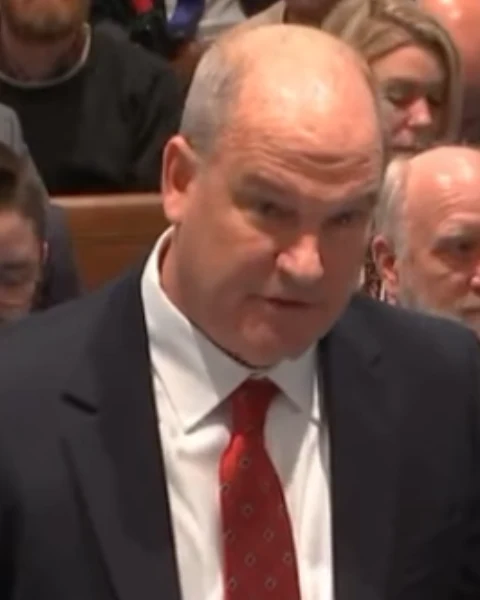
South Carolina attorney on Alex Murdaugh's defense team who handled major witness examinations and closing argument.
Appeared2023 Murder Trial
5,666 lines·122 proceedings·6 mentions
About
Jim Griffin represented Alex Murdaugh at trial and conducted examinations across the investigation, forensic evidence, financial-motive evidence, family testimony, and the defense case. Early in the proceedings, he challenged the subjective and case-specific limits of firearms comparisons, tested what investigators observed and failed to document at Moselle, and objected to sending multiple recovered firearms to the jury. Judge Newman overruled the firearms objection, finding the weapons relevant and more probative than prejudicial.
Griffin used financial witnesses to dispute whether Murdaugh faced an immediate crisis on June 7. He elicited that the law firm initially suspected hidden fees rather than theft, that several bank accounts had positive balances, that Murdaugh historically had access to credit, and that a forensic analysis omitted real-estate equity, retirement assets, partnership interests, and additional borrowing capacity. Through Chris Wilson and other witnesses, Griffin also developed testimony about Murdaugh's family relationships, late-evening calls, and demeanor while preserving the distinction between financial misconduct and the homicide charges.
On physical and investigative evidence, Griffin emphasized that gunshot residue could persist or transfer and could not establish when or how particles reached an item. His cross-examination of lead investigator David Owen developed missed search opportunities, uncollected clothing, the absence of recovered murder weapons, negative blood findings, and inaccurate grand-jury statements about shirt testing and shotgun loads. When the State argued that questions about alternative investigative leads opened the door to the September roadside shooting, Griffin renewed the defense objection. The court reaffirmed its ruling permitting limited evidence, and the parties agreed to an abbreviated presentation while Griffin preserved the objection.
During the defense case, Griffin examined Buster Murdaugh about family life, firearms, and June 7 communications; Mark Ball about crime-scene access and the difference between anger over financial theft and proof of murder; and Alex Murdaugh about his movements, addiction, financial crimes, admitted kennel lie, and denial of the killings. Griffin also presented Timothy Palmbach's competing trajectory and two-shooter analysis, developed John Marvin Murdaugh's account of the investigation and family movements, and tested Kenneth Kinsey's reconstruction and its limits.
In closing, Griffin acknowledged that Murdaugh falsely denied being at the kennels but attributed the lie to addiction, paranoia, and fear of scrutiny rather than concealment of murder. He challenged the State's crime-scene work, phone and vehicle timeline, blood-testing history, rain-jacket evidence, firearms comparisons, motive theory, and single-shooter interpretation. Griffin ultimately argued that the circumstantial evidence left unresolved questions and requested not-guilty verdicts.
Trial Record (122)
No proceedings match this filter.