Creighton Waters led the State's prosecution, presenting a circumstantial theory built around Alex Murdaugh's presence on the kennel video, family firearms, digital timing, and alleged financial pressure. He cross-examined Murdaugh about the newly admitted kennel lie and used closing argument to connect those issues to the State's request for guilty verdicts.
ProsecutionSouth Carolina Attorney General's Office
Creighton Waters
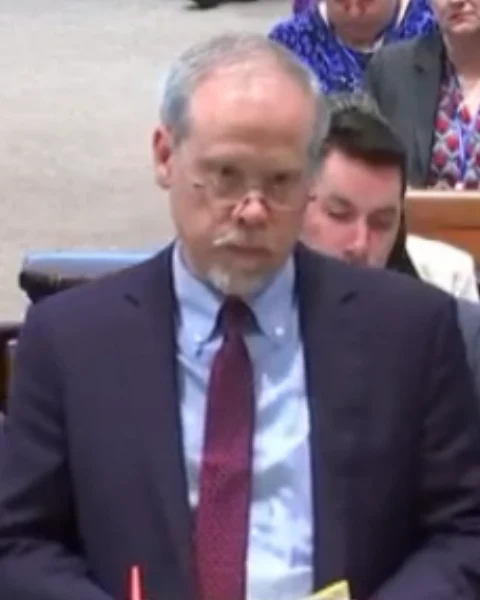
Prosecutor in the South Carolina Attorney General's Office who served as lead counsel for the State against Alex Murdaugh.
Appeared2023 Murder Trial
9,743 lines·130 proceedings·1 mention
About
Creighton Waters led the prosecution and presented the State's opening on Day 3. He framed the case as circumstantial, alleging that the kennel video and phone activity placed Alex Murdaugh with Maggie and Paul shortly before their phones stopped showing activity. Waters previewed family-firearm, ammunition, forensic, digital, 911, and recorded-interview evidence while acknowledging the State's burden to prove the charges beyond a reasonable doubt.
Across the State's case, Waters examined first responders and investigators about the Moselle scene, evidence preservation, searches, firearms, ammunition, and recorded statements. His redirects addressed defense challenges concerning contamination and the scope of the investigation. When the defense renewed its objection to admitting multiple firearms, Waters argued that their examination showed the investigation's breadth; Judge Newman ruled that the firearms were relevant and more probative than prejudicial. Waters also elicited Rogan Gibson's identification of Paul, Maggie, and Alex as the voices on the kennel video.
Waters developed the financial-motive theory through testimony about the law firm's unresolved June 7 fee inquiry, later-discovered diverted funds, bank debt and credit, and civil discovery seeking Murdaugh's financial records. The court admitted alleged financial-misconduct evidence for the State's motive theory under Rules 404(b) and 403, separately treated June 7 conduct as context under res gestae, and addressed a limiting instruction. Waters treated the potential exposure of the financial conduct as pressure relevant to motive, while witnesses and defense questioning supplied qualifications about the timing and immediacy of that pressure.
Waters used forensic and digital witnesses to address competing accounts of the shootings and the evening's timeline. Ellen Riemer explained the autopsy findings and maintained a noncontact, shoulder-to-head interpretation of Paul's fatal wound; on redirect, the court sustained a defense objection to repetitive questioning before she gave a narrower description. Kenneth Kinsey responded to the defense's trajectory demonstration while acknowledging that the evidence did not establish Paul's exact position. Peter Rudofski combined phone, carrier, vehicle, and OnStar information to present the sequence of phone activity, travel, and the interval before the 911 call.
On Days 23 and 24, Waters cross-examined Murdaugh about his newly admitted presence at the kennels, prior interviews, legal and law-enforcement connections, financial deceptions, and the phone and vehicle timeline. He contrasted Murdaugh's detailed recollections with uncertainty about other timing and communication details and characterized the calls and movement after 9:02 p.m. as alleged alibi activity. Murdaugh admitted lying about the kennel visit and stealing client funds but denied fabricating his trial account, manufacturing an alibi, or killing Maggie and Paul. In rebuttal, Waters questioned Ronnie Crosby, Riemer, and Mark Ball to answer challenges involving bias, wound reconstruction, firearm use, and Murdaugh's earlier omission of the kennel visit. His Day 27 closing joined the financial-pressure theory, kennel video, digital timeline, firearms, forensic evidence, and changing accounts into the State's request for guilty verdicts, which the jury returned on Day 28.
Trial Record (130)
No proceedings match this filter.