Jeannie Seckinger explained PMPED's financial controls and traced the June 7 Faris-fee inquiry, the later review of transactions involving Alex Murdaugh's DBA Forge account, and the firm's client reimbursements. Cross-examination tested the timing, scope, and limits of her investigation, while redirect addressed her continuing demand for documentary proof and the firm's earlier trust in Murdaugh.
Witness
Jeannie Seckinger
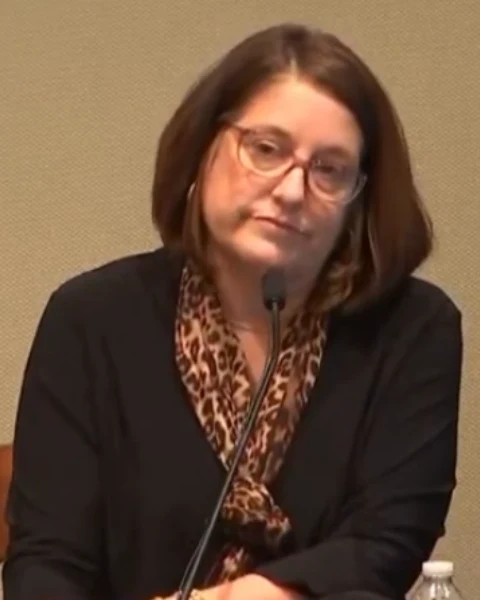
PMPED chief financial officer who helped uncover Alex Murdaugh's use of a DBA account named Forge.
Appeared2023 Murder Trial
1,381 lines·26 proceedings·19 mentions
About
Jeannie Seckinger explained PMPED's compensation, trust-account, and disbursement procedures during an admissibility hearing and later before the jury. As the firm's financial officer, she described how professional fees, client recoveries, and attorney-approved disbursements were expected to move through the firm's financial channels.
Seckinger traced the June 7 inquiry into $792,000 in Faris fees, including her demand that Alex Murdaugh provide proof that the money remained in Chris Wilson's trust account. She said the discussion ended after Murdaugh received news about his terminally ill father and that the firm suspended its inquiry after the killings while supporting him. Although Wilson's office later reported that the money was available, Seckinger testified that she continued seeking a ledger or comparable documentary proof.
She also described the September discovery of a Faris fee check payable personally to Murdaugh and her review of payments to Forge. Using checks, account information, spreadsheets, and correcting disbursements, she distinguished Murdaugh's Bank of America account doing business as Forge from the legitimate Forge Consulting and explained the firm's investigation and reimbursement of affected clients. She testified that the spreadsheet's category for transactions involving the DBA Forge account totaled $2,841,512.55, while acknowledging a spreadsheet correction and limits on one signature identification.
Cross-examination tested the timing, scope, and foundation of the firm's review. Seckinger agreed that the firm suspected possible income concealment rather than theft on June 7, that relevant electronic records had existed for years, and that she lacked personal knowledge of some client interviews, possible undisclosed arrangements, and the ultimate use of all traced funds. On redirect, she maintained that she knew of no legitimate explanation for client funds entering the DBA Forge account and attributed the delayed broader review to the firm's prior trust in Murdaugh, the absence of client complaints, and concern for him after the killings. The court instructed the jury that the financial evidence was admitted only for consideration of the State's motive theory, not as character or propensity evidence or as proof of the charged offenses.
Trial Record (26)
No proceedings match this filter.