Skip to content
personpersonClifton NewmanClifton NewmanSouth Carolina circuit judge who presided over the 2023 murder trial from jury selection through sentencing.← All People
JudgeSouth Carolina Circuit Court

Clifton Newman
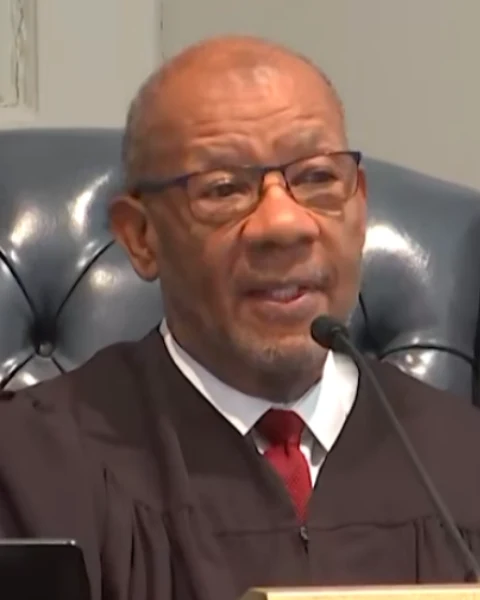
Courtroom still of Clifton Newman.

South Carolina circuit judge who presided over the 2023 murder trial from jury selection through sentencing.

4,239 lines·251 proceedings

About

Clifton Newman presided from jury qualification through sentencing. He screened prospective jurors for publicity exposure, fixed opinions, personal connections, and hardship; swore the selected jury; explained the presumption of innocence and burden of proof; and repeatedly directed jurors not to discuss or independently investigate the case.

Newman decided evidentiary disputes throughout the presentation of the State's and defense cases. After in-camera proceedings, he admitted alleged financial-crimes evidence for the State's motive theory under Rules 404(b) and 403. He separately admitted evidence of June 7 conduct as context under res gestae and ultimately limited the jury's use of other-acts evidence to motive. He initially excluded evidence concerning the roadside shooting because of relevance and prejudice concerns, then allowed a limited presentation after finding that defense questioning about Eddie Smith and investigative alternatives had opened the door.

His trial management included replacing two COVID-positive jurors, removing Juror 785 on Day 28 for outside discussions about the case, sealing that inquiry, and seating an alternate through an unopposed blind draw. He also granted a secured jury view of Moselle, denied renewed directed-verdict motions, and resolved charge requests before instructing jurors on the four accusations, reasonable doubt, the evaluation of evidence, and unanimous deliberations.

The jury returned unanimous guilty verdicts on two murder charges and two weapon-possession charges on Day 28. Newman denied the defense motion to set aside those verdicts. On Day 29, he imposed a natural-life sentence for each murder and ordered the sentences to run consecutively; he imposed no sentence on the weapon-possession indictments because the life sentences had been imposed on the murder indictments.

Trial Record (251)

20232023 Murder TrialJan 23, 2023 โ€“ Mar 3, 2023

Clifton Newman presided from jury selection through sentencing, managing evidentiary rulings, juror replacements, trial instructions, and the verdict proceedings. He admitted financial-crimes evidence for a limited purpose, received the jury's guilty verdicts, and imposed two consecutive natural-life sentences.

Jury Selection Day 1

jury selectionJury Voir Dire - Panel Three179lines spoken

Summary

Panel Three disclosed extensive publicity exposure, community and witness ties, hardships, and qualification issues; the court excused several prospective jurors and returned Juror 705 to the pool after individual questioning.

Jury Selection Day 2

jury selectionJury Voir Dire - Panel Four493lines spoken

Summary

Panel Four voir dire examined widespread publicity, fixed opinions, and local ties to the Murdaugh family, law enforcement, and potential witnesses. The court excused jurors who could not be impartial, retained others after individual inquiry, and ended with 122 qualified jurors for an 80-person strike sheet.

Day 3

jury selectionJury Selection46lines spoken

Summary

The parties completed selection of twelve jurors and six alternates, waived hearings on four recorded statements, and obtained rulings on jury visibility and the sealing of graphic exhibits before the jury was sworn.

Day 4

ProceduralOpening Court Proceedings11lines spoken

Summary

The judge admitted an email alleging a juror-identity disclosure violation as Court's Exhibit Number 2, then addressed shielding an audience-visible monitor for a planned video presentation.

Day 5

Day 6

Day 7

Day 8

Day 9

ProceduralRule 404(b) Hearing Argument and Scheduling23lines spoken

Summary

The parties contested whether alleged financial misconduct supported motive or fear of detection. The court found enough evidence for the law-firm misconduct threshold but deferred final admissibility decisions pending the Satterfield documents, proposed Mark Tinsley testimony, bank witnesses, and further argument.

Day 10

ProceduralIn-Camera Witness and Privilege Issues14lines spoken

Summary

The State sought permission to investigate statements allegedly made by Alex Murdaugh at a June 10 gathering, while the defense objected that the request was unauthorized discovery; the Court requested briefing and deferred a privilege ruling.

Day 11

ProceduralRaincoat-Evidence Argument12lines spoken

Summary

The defense challenged the foundation for anticipated gunshot-residue testimony about Exhibit 226, while the State argued that witness and recovery testimony supplied a sufficient chain. The court adjourned without an express ruling.

Day 12

Day 13

Day 14

Day 15

DirectMatthew Wild - DirectMatthew WildJohn B. Conrad7lines spoken

Summary

Matthew Wild mapped Paul, Maggie, and Alex Murdaugh's phones using call records, device data, and drive tests, while stressing that the records did not identify who held a device. He found the 911 call compatible with a Moselle location despite its use of a Varnville-area tower and traced Alex's phone through Almeda-, Summerville-, and Hampton-area sectors from June 8-15.

Day 16

Day 17

DirectMarian Proctor - DirectMarian ProctorCreighton Waters3lines spoken

Summary

Marian Proctor recounted Maggie's final June 7 call about returning from Edisto and an expected Almeda visit, then described Alex's statements, priorities, and apparent lack of fear after the killings. She distinguished her firsthand conversations from a kennel account relayed through her mother and added limited context about Buster, Maggie's kennel habits, and the family's AR-style guns.

CrossMarian Proctor - CrossMarian ProctorJim Griffin4lines spoken

Summary

Marian Proctor authenticated a recent family photograph, qualified her concern about the missed Almeda visit, and described Alex's grief and close relationships with Maggie and Paul. She retained a separate concern about his focus after the killings and provided ordinary context about his firearm-carrying habits, Bubba, and Maggie's enjoyment of the kennel dogs.

ProceduralRoadside-Shooting Motion in Limine34lines spoken

Summary

The State argued that Murdaugh's false unknown-assailant account after the roadside shooting was connected to the financial confrontation and intended to suggest the killers had returned; the defense challenged its relevance and admissibility, and the court deferred ruling until the next morning.

Day 18

ProceduralRoadside-Shooting Evidence Ruling2highlights13lines spoken

Summary

Judge Newman excluded the proposed roadside-shooting evidence at that time, finding insufficient logical relevance and an unacceptable risk of violent-propensity prejudice.

Highlights (2)

rulingThe court granted the defense motion to exclude the roadside-shooting evidence at that time, finding that it failed logical-relevance and Rule 403 analysis and risked suggesting a propensity for violent acts.Open in transcript →Watch this moment ▶
Quoteโ€œWe have guardrails, and the Court is to place guardrails to keep things within a reasonable realm, and I believe this, as I stated, would be a bridge too far.โ€— Clifton NewmanJudge Newman explained why he would not extend the admission of financial-motive evidence to the proposed roadside-shooting evidence.Open in transcript →Watch this moment ▶

Day 19

ProceduralRoadside-Shooting Evidence Argument1highlight25lines spoken

Summary

The court reaffirmed that the defense had opened the door to limited roadside-shooting evidence, after which counsel agreed on an abbreviated presentation while preserving the defense's objection.

Highlights (1)

rulingThe defense placed its objection to the prior redirect ruling on the record, arguing that its cross-examination had not opened the door to the roadside shooting and that any responsive evidence had to remain proportional. The court reaffirmed its ruling that the defense had introduced the relationship between Alex Murdaugh and Eddie Smith and that the State could explore it, while reserving discussion about the permissible extent of that evidence.Open in transcript →Watch this moment ▶

Day 20

Day 21

Day 22

Day 23

ProceduralTestimony-Scope Argument and Right-to-Testify Colloquy2highlights28lines spoken

Summary

The court declined to revisit its admission of financial-crimes and other-acts evidence, preserved future objections to specific questioning, and advised Alex Murdaugh of his right to testify; Murdaugh said he would take the stand.

Highlights (2)

rulingThe court declined to change its prior admissibility ruling or create a special exception for Murdaugh, while preserving objections to particular questions for rulings as they arose.Open in transcript →Watch this moment ▶
Quoteโ€œAnd the Court will not change course during the trial and provide any special exception to Mr. Murdaugh with regard to testimony regarding the matters that the Court has already determined to be admissible.โ€— Clifton NewmanThe court expressly maintained its prior ruling on the financial-crimes and other-acts evidence.Open in transcript →Watch this moment ▶

Day 24

Day 25

ProceduralJury View Argument and Ruling1highlight9lines spoken

Summary

The court granted the defense's request for a secured jury view of Moselle but refused to poll jurors, citing the risk of premature deliberations.

Highlights (1)

rulingThe court declined to poll the jury, reasoning that doing so could invite premature deliberations, but allowed a jury view upon a party's request. After the defense confirmed its request, the court directed that law enforcement secure the scene and arranged the visit.Open in transcript →Watch this moment ▶

Day 26

ProceduralIn-camera Hearing22lines spoken

Summary

After a sealed in-camera portion, the defense renewed its prior directed-verdict motions, the judge denied them, and the court set safeguards for the jury's next-day view of Moselle.

ProceduralIn-camera Hearing68lines spoken

Summary

The judge limited other-bad-acts evidence to motive, reserved the voluntary-intoxication charge, required an instruction addressing other charges and punishment, and resolved several additional charge requests.

Day 27

Day 28

ProceduralJuror 785 Removal and Replacement1highlight27lines spoken

Summary

The court removed Juror 785 for outside discussions about the case, sealed the inquiry record, and seated Juror 254 by an unopposed blind selection before defense closing resumed.

Highlights (1)

rulingThe court found that Juror 785 had discussed the case with at least three people and expressed an opinion about evidence, ordered her removal, and directed that the inquiry materials be sealed. The defense did not except to the ruling but criticized SLED's role in interviewing two people; the court said its own inquiry did not involve discussions with SLED agents.Open in transcript →
Jury InstructionJury Charge1highlight14lines spoken

Summary

Judge Newman defined the governing law for the four charges, limited other-acts evidence to motive, instructed the jury on unanimous deliberations and verdict forms, and sent the jury to deliberate.

Highlights (1)

Quoteโ€œIf these circumstances merely portray the defendant's behavior as suspicious, the proof has failed.โ€— Clifton NewmanThe instruction stated the limit on a conviction resting on circumstantial evidence that establishes only suspicious behavior.Open in transcript →
VerdictVerdict1highlight24lines spoken

Summary

The jury returned unanimous guilty verdicts on two murder charges and two weapon-possession charges, and the court denied the defense's motion to set aside the verdict before scheduling sentencing for the next morning.

Highlights (1)

Quoteโ€œThe jury has been polled and the verdict is a unanimous verdict.โ€— Clifton NewmanThe court formally confirmed that every juror maintained the published verdicts after individual polling.Open in transcript →Watch this moment ▶

Day 29

sentencingSentence of the Court2highlights23lines spoken

Summary

The court imposed two consecutive natural-life sentences after Murdaugh maintained his innocence, then addressed juror privacy and reported postings of courtroom photographs.

Highlights (2)

rulingThe court sentenced Murdaugh to natural life for each murder, ordered the two life sentences to run consecutively, and imposed no sentence on the weapon-possession indictments because life sentences had been imposed on the murder indictments.Open in transcript →Watch this moment ▶