Skip to content
personpersonDick HarpootlianDick HarpootlianSouth Carolina attorney who led Alex Murdaugh's defense team at the 2023 murder trial.← All People
DefenseDefense team (Alex Murdaugh)

Dick Harpootlian
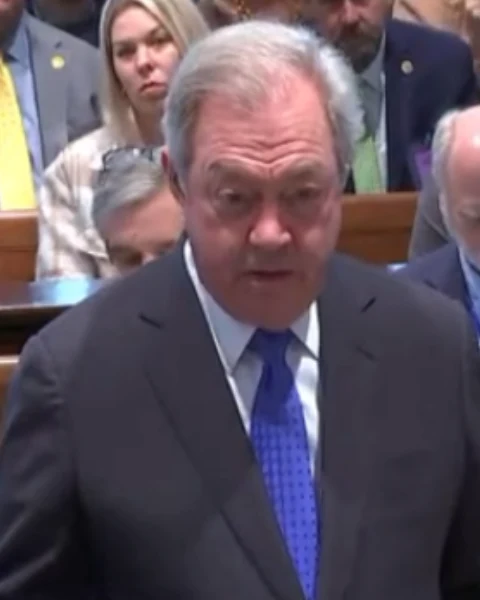
Courtroom still of Dick Harpootlian.

South Carolina attorney who led Alex Murdaugh's defense team at the 2023 murder trial.

5,106 lines·113 proceedings

About

Dick Harpootlian opened for the defense by denying that Alex Murdaugh killed Maggie and Paul and framing the State's case as circumstantial and too dependent on an investigation that focused on Alex early. He previewed disputes over the phone-and-vehicle timeline, the absence of detected human blood on seized clothing, the missing firearms, wound evidence, and a possible two-shooter scenario. He emphasized the presumption of innocence and reasonable doubt.

Across the State's case, Harpootlian's cross-examinations tested how the scene and electronic evidence were preserved. First responders and investigators faced questions about unrecorded tire and footwear impressions, movement through the scene, limited documentation, and the absence of specialized searches or visible blood in the Moselle house. His questioning of phone and carrier witnesses separated custody from forensic analysis, highlighted uncertainty about a recovered phone's precise location and power-state handling, and established limits on rural tower-location and fingerprint evidence.

On motive and family-context evidence, Harpootlian sought to narrow testimony tied to financial misconduct and objected to Maggie's reported anxiety about a civil lawsuit. The court found that account responsive to the defense's portrayal of the family, overruled the objection, and denied a mistrial. His questioning elicited that Tony Satterfield had not threatened Alex with exposure before June 8, while Blanca Turrubiate-Simpson described affection between Alex and Maggie, reported no visible blood in the bathroom, and qualified her clothing identifications. When the court later allowed a limited presentation concerning the roadside shooting, the defense preserved its objection.

Forensic mechanics became another central line of examination. Harpootlian questioned Ellen Riemer about crime-scene inputs, autopsy documentation, photographs, X-rays, pellet counts, and an alternative contact-wound theory for Paul. Riemer acknowledged several limits but maintained her shoulder-to-head trajectory and noncontact conclusion. Harpootlian also tested Kenneth Kinsey's reconstruction through firing-distance and shooter-position questions, then developed competing defense opinions through Mike Sutton's trajectory analysis, Kenneth Zercie's criticism of scene processing, and Jonathan Eisenstat's forensic-pathology testimony.

During rebuttal, Harpootlian challenged whether Ronnie Crosby's anger and financial losses affected his testimony; Crosby rejected that suggestion, and the court instructed the jury to disregard one argumentative remark. Harpootlian again tested Riemer's documentation and physical reasoning, while she maintained her conclusions. He secured a jury view of Moselle and persuaded the court to require a tailored State rebuttal.

Trial Record (113)

20232023 Murder TrialJan 23, 2023 – Mar 3, 2023

Dick Harpootlian led the defense presentation by challenging the State's timeline and investigation through examinations on scene preservation, phone evidence, wound mechanics, and shooting reconstruction. He also contested the scope of financial, roadside-shooting, and rebuttal evidence while preserving defense objections.

Jury Selection Day 1

jury selectionJury Voir Dire - Panel Three21lines spoken

Summary

Panel Three disclosed extensive publicity exposure, community and witness ties, hardships, and qualification issues; the court excused several prospective jurors and returned Juror 705 to the pool after individual questioning.

Jury Selection Day 2

jury selectionJury Voir Dire - Panel Four129lines spoken

Summary

Panel Four voir dire examined widespread publicity, fixed opinions, and local ties to the Murdaugh family, law enforcement, and potential witnesses. The court excused jurors who could not be impartial, retained others after individual inquiry, and ended with 122 qualified jurors for an 80-person strike sheet.

Day 3

jury selectionJury Selection48lines spoken

Summary

The parties completed selection of twelve jurors and six alternates, waived hearings on four recorded statements, and obtained rulings on jury visibility and the sealing of graphic exhibits before the jury was sworn.

OpeningOpening Statement - Dick HarpootlianDick Harpootlian2highlights10lines spoken

Summary

The defense denied that Alex Murdaugh killed Maggie and Paul, challenged the State's timeline and investigation, and previewed digital, firearm, recording, and forensic disputes in support of reasonable doubt.

Highlights (2)

Quote“Much more likely there were two people, but, again, we don't have to prove anything.”— Dick HarpootlianThis succinctly states the defense's alternative-shooter theory while preserving its position that the State retained the burden of proof.Open in transcript →Watch this moment ▶
Quote“If I say something that offends you at some point, don't hold that against Alex. Hold it against me.”— Dick HarpootlianHarpootlian directly separated the jury's assessment of defense counsel from its judgment of the defendant.Open in transcript →Watch this moment ▶

Day 4

ProceduralOpening Court Proceedings4lines spoken

Summary

The judge admitted an email alleging a juror-identity disclosure violation as Court's Exhibit Number 2, then addressed shielding an audience-visible monitor for a planned video presentation.

Day 5

Day 6

Day 7

Day 8

Day 9

Day 10

ProceduralIn-Camera Witness and Privilege Issues5lines spoken

Summary

The State sought permission to investigate statements allegedly made by Alex Murdaugh at a June 10 gathering, while the defense objected that the request was unauthorized discovery; the Court requested briefing and deferred a privilege ruling.

Day 11

ProceduralRaincoat-Evidence Argument8lines spoken

Summary

The defense challenged the foundation for anticipated gunshot-residue testimony about Exhibit 226, while the State argued that witness and recovery testimony supplied a sufficient chain. The court adjourned without an express ruling.

Day 12

Day 14

Day 15

profferBlanca Turrubiate-Simpson - ProfferBlanca Turrubiate-SimpsonJohn Meadors1highlight4lines spoken

Summary

Simpson proffered Maggie Murdaugh's reported anxiety about a $30 million lawsuit; the court found the testimony responsive to the defense's family portrayal, overruled the objection, and denied a mistrial.

Highlights (1)

Quote“There's no connecting it to the defendant. I don't understand what -- I mean, not only is it hearsay, it's not relevant to the issues being litigated here.”— Dick HarpootlianThe defense stated its central hearsay and relevance challenge to the proffered testimony.Open in transcript →Watch this moment ▶

Day 16

DirectEllen Riemer - DirectEllen RiemerCreighton Waters13lines spoken

Summary

Ellen Riemer explained the victims' autopsy findings, wound paths, probable shot sequences, causes and manners of death, and the limits of her reconstruction; after cross was deferred, the parties addressed witness travel, the State's characterization of new GM timeline material, and the projected trial schedule.

Day 17

ProceduralRoadside-Shooting Motion in Limine20lines spoken

Summary

The State argued that Murdaugh's false unknown-assailant account after the roadside shooting was connected to the financial confrontation and intended to suggest the killers had returned; the defense challenged its relevance and admissibility, and the court deferred ruling until the next morning.

Day 18

Day 19

ProceduralRoadside-Shooting Evidence Argument1highlight15lines spoken

Summary

The court reaffirmed that the defense had opened the door to limited roadside-shooting evidence, after which counsel agreed on an abbreviated presentation while preserving the defense's objection.

Highlights (1)

Quote“I hate to sound like a broken record, but I don't think want any appellate record ever to look at this and say, well, you agreed to it. We're agreeing to this process pursuant to Your Honor's ruling this morning.”— Dick HarpootlianDefense counsel expressly distinguished agreement on an expedited presentation process from waiver of the underlying evidentiary objection.Open in transcript →Watch this moment ▶
CrossKenneth L. Kinsey - CrossKenneth L. KinseyDick Harpootlian2highlights258lines spoken

Summary

Defense counsel used photographs, Kinsey's report, and physical demonstrations to test his shooting reconstruction, eliciting limitations about firing distance, exact shooter positions, and the tire-impression comparison.

Highlights (2)

Quote“I can't explain that, Mr. Harpootlian.”— Kenneth L. KinseyKinsey could not reconcile the demonstrated close firing position with the absence of stippling or powder burns.Open in transcript →Watch this moment ▶
Quote“I don't know where they wanted the end of that barrel placed, Mr. Harpootlian. I can't tell you that part. With my science I can't -- all I can look at is the angle.”— Kenneth L. KinseyKinsey expressly limited his opinion to the physical angle rather than the shooter's precise mechanics or intent.Open in transcript →Watch this moment ▶

Day 20

Day 21

CrossMike Sutton - CrossMike SuttonDavid A. Fernandez16lines spoken

Summary

The prosecution challenged Mike Sutton's qualifications, unlabeled graphs, acoustic-test inputs, projectile assumptions, and short-shooter renderings; Sutton acknowledged several limits but maintained that his engineering analysis supported low firing positions and faint gunshot audibility inside Moselle.

Day 22

Day 23

Day 24

Day 25

ProceduralJury View Argument and Ruling1highlight9lines spoken

Summary

The court granted the defense's request for a secured jury view of Moselle but refused to poll jurors, citing the risk of premature deliberations.

Highlights (1)

Quote“So, I don't want the jury influenced by, you know, crazy paparazzi.”— Dick HarpootlianDefense counsel expressed concern that spectators at Moselle could improperly affect the jury view, prompting security arrangements.Open in transcript →Watch this moment ▶

Day 26

ProceduralScope of Rebuttal Testimony1highlight5lines spoken

Summary

The defense challenged the proposed breadth of the State's reply case, and the judge required rebuttal to be finely tailored while reserving individual rulings for specific objections.

Highlights (1)

Quote“It seems to me the State's position is let no dead horse go unbeaten. This has got to stop.”— Dick HarpootlianDefense counsel memorably expressed concern that the proposed reply case would become repetitive and further extend the trial.Open in transcript →Watch this moment ▶
ProceduralIn-camera Hearing14lines spoken

Summary

After a sealed in-camera portion, the defense renewed its prior directed-verdict motions, the judge denied them, and the court set safeguards for the jury's next-day view of Moselle.

ProceduralIn-camera Hearing48lines spoken

Summary

The judge limited other-bad-acts evidence to motive, reserved the voluntary-intoxication charge, required an instruction addressing other charges and punishment, and resolved several additional charge requests.

Day 27

Day 28

Day 29

sentencingSentence of the Court6lines spoken

Summary

The court imposed two consecutive natural-life sentences after Murdaugh maintained his innocence, then addressed juror privacy and reported postings of courtroom photographs.