Skip to content
personpersonPaul McManigalPaul McManigalCell-phone-forensics examiner who handled device extractions and conducted same-model Raise to Wake testing.← All People
Expert witness

Paul McManigal

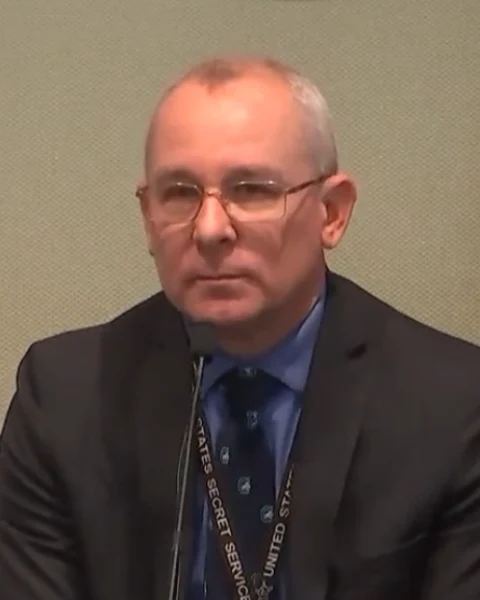
Courtroom still of Paul McManigal.

Cell-phone-forensics examiner who handled device extractions and conducted same-model Raise to Wake testing.

152 lines·10 proceedings·3 mentions

About

Paul McManigal first testified about his handling of digital evidence. He received an unprocessed extraction attributed to Alex Murdaugh's phone and created a reduced copy based on attorney-directed redaction decisions, without performing additional analysis. He said the call logs were not redacted.

McManigal also authenticated custody records for an iPhone attributed to Paul Murdaugh. He said he could not unlock the phone or otherwise alter its data. On cross-examination, he testified that it was powered off when he received it and that he later charged it, but he could not recall whether its battery had been fully drained on arrival.

Later, McManigal explained the accelerometer-driven Raise to Wake feature and described movement and throw tests using the same iPhone model as Maggie Murdaugh's phone, with a slightly newer operating-system version. Gentle movement tended to illuminate the display, while nine of ten frisbee-like throws left it off. He offered the testing only to show that throwing a matching-model phone would not necessarily activate its screen.

Cross-examination established that McManigal conducted the experiments alone without recordings, measurements, documented controls, or the test phone in court. He acknowledged that he was not an engineer, did not know the activation threshold, and could say only that the screen might remain off in the proposed scenario. On redirect, he distinguished a gentle pickup demonstration from his more aggressive throws. On recross, he agreed that reliable results would require more than ten trials and that he had not applied the statistical method he described.

Trial Record (10)

20232023 Murder TrialJan 23, 2023 โ€“ Mar 3, 2023Called by prosecution

Paul McManigal handled phone extractions and custody evidence, then testified as a cell-phone-forensics expert about Raise to Wake testing with a matching-model phone. Cross-examination limited the significance of his undocumented, variable experiment to the possibility that a thrown phone's screen might remain off.

Day 7

DirectPaul McManigal - DirectPaul McManigalJohn B. Conrad1highlight40lines spoken

Summary

Paul McManigal explained the limited redaction of an extraction attributed to Alex Murdaugh's phone, confirmed that call logs remained intact, and documented his unsuccessful attempt to unlock the phone he believed was Paul's.

Highlights (1)

Quoteโ€œI was asked to redact potential client/lawyer privileged information by reducing it down to a certain timeframe that was more pertinent to the case and potentially reducing any privileged communication.โ€— Paul McManigalExplains the limited purpose and scope of McManigal's handling of the phone extraction.Open in transcript →Watch this moment ▶
CrossPaul McManigal - CrossPaul McManigalPhillip D. Barber1highlight4lines spoken

Summary

McManigal said the phone was powered off when received and that he charged it, but he could not recall whether its battery had been completely drained.

Highlights (1)

Quoteโ€œThe phone was powered off when I received it.โ€— Paul McManigalThe answer established the phone's observed power state without establishing that its battery was completely drained.Open in transcript →Watch this moment ▶

Day 8

Day 9

Day 26

DirectPaul McManigal - DirectPaul McManigalJohn B. Conrad2highlights21lines spoken

Summary

Paul McManigal testified that a thrown iPhone may not activate Raise to Wake, while acknowledging different software and variable test results.

Highlights (2)

Quoteโ€œNo, not at all. Sometimes the screen would turn on when I threw, land face up, and then the screen would turn on. But a lot of times I would throw it and the screen would not turn on. It depends on how that accelerometer registered that movement.โ€— Paul McManigalMcManigal acknowledged that the experiments did not produce uniform results and tied the variation to how the accelerometer registered movement.Open in transcript →Watch this moment ▶
Quoteโ€œIf the phone is thrown, the screen does not always turn on. In my experimentation, I determined that when the phone is thrown more like a frisbee, nine out of ten times the screen does not turn on. The times that it did turn on most often was when I pick it up and tried to shake it, then the screen would come on briefly.โ€— Paul McManigalThis was McManigal's principal conclusion from testing whether a thrown phone would necessarily activate its screen.Open in transcript →Watch this moment ▶
CrossPaul McManigal - CrossPaul McManigalPhillip D. Barber2highlights59lines spoken

Summary

The defense exposed documentation and expertise limits in McManigal's Raise to Wake experiments, but the judge declined to strike his qualified opinion that a moved phone's screen might remain off.

Highlights (2)

Quoteโ€œIt did not cross my mind to video record my experiments. I just did the experiments to determine whether or not the screen would turn on.โ€— Paul McManigalMcManigal explained why the experiments supporting his rebuttal opinion had not been video recorded.Open in transcript →Watch this moment ▶
Quoteโ€œI cannot tell you that it will not come on. I can tell you that it might not come on.โ€— Paul McManigalMcManigal expressly limited what his experiments could establish about the screen during the proposed phone-disposal scenario.Open in transcript →Watch this moment ▶
RecrossPaul McManigal - RecrossPaul McManigalPhillip D. Barber1highlight7lines spoken

Summary

Paul McManigal acknowledged that he did not apply the statistical control-and-sample method he described when judging his experiment's reliability.

Highlights (1)

Quoteโ€œThat it doesn't take that long to figure out that sometimes it turns on and sometimes it doesn't.โ€— Paul McManigalMcManigal gave an observational rather than calculated basis for his claim about how many trials would establish reliability.Open in transcript →Watch this moment ▶