Skip to content
personpersonMike SuttonMike SuttonForensic engineer retained by the defense to analyze shooting trajectories, vehicle movement, acoustics, phone motion, and lighting.← All People
Expert witness

Mike Sutton

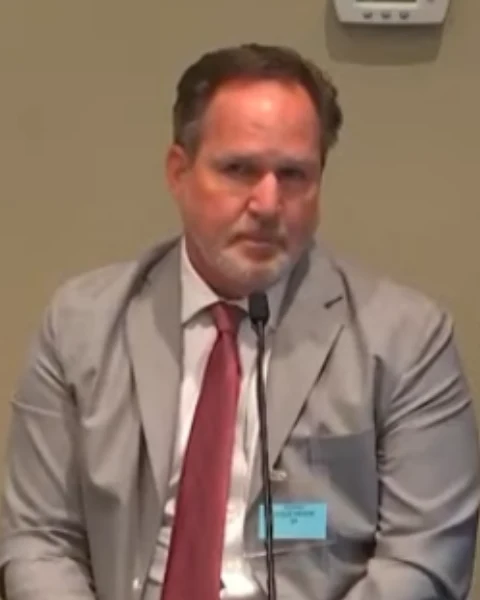
Courtroom still of Mike Sutton.

Forensic engineer retained by the defense to analyze shooting trajectories, vehicle movement, acoustics, phone motion, and lighting.

762 lines·7 proceedings·2 mentions

About

Mike Sutton testified for the defense as an engineering expert, presenting analyses of shooting trajectories, acoustics, vehicle movement, possible phone motion, and headlight illumination. His work drew on SLED measurements and photographs, a later scene scan, and cartridge-case locations.

Sutton placed the intersection of rifle paths near the quail pen and dog house within a small area. He said a person about 5-foot-2 to 5-foot-4 firing from a low, hip-level position best fit his analysis and considered it very unlikely that Alex Murdaugh fired the quail-pen shot under the posture assumptions he used. He nevertheless acknowledged that a taller person could fit the trajectory by crouching, kneeling, bending, or adopting another altered posture.

The prosecution challenged Sutton's specialized credentials and the assumptions underlying his opinions. Sutton acknowledged that he lacked formal firearms, pathology, gunshot-wound, and shooting-reconstruction credentials, and that his analysis did not model projectile deflection, victim orientation, casing movement, or every possible firing position. He maintained that trajectory, acoustic, and vehicle-motion analysis fell within mechanical engineering and that the variables raised on cross-examination would not materially change his conclusion that an unprepared listener inside the house would not hear the shots.

On redirect, Sutton distinguished measured projectile physics from assumptions about weapon handling and reaffirmed his height opinion when limited to hip or shoulder operation. On recross, he agreed that different-sized people could fit the trajectories through different firing positions and that someone at the kennels would have heard the gunfire. A State rebuttal expert later accepted the general direction of the quail-pen path but disputed whether the available defects, weapon position, and cartridge evidence could reliably establish shooter height or exclude a taller shooter.

Trial Record (7)

20232023 Murder TrialJan 23, 2023 – Mar 3, 2023Called by defense

Mike Sutton presented defense engineering opinions on shooting trajectories, shooter height and posture, acoustics, vehicle movement, possible phone motion, and headlight illumination. He acknowledged that alternative firing positions and unmodeled variables limited categorical conclusions.

Day 21

DirectMike Sutton - DirectMike SuttonDick Harpootlian3highlights326lines spoken

Summary

Mike Sutton presented defense reconstructions of the shooting trajectories, gunshot audibility, and vehicle evidence, opining that the quail-pen shot most likely came from a short, low-positioned shooter and was very unlikely to have been fired by Alex Murdaugh.

Highlights (3)

Quoteβ€œSo, this is the shooter making both shots. And you'll see, and there's a couple different angles I could show you, but they're really close and in the right location relative to the empty shell casings. So, what that says, it's not -- I'm not saying it's exactly there because there's some variables to it, but I find it interesting that the two shot trajectories cross at a point where both shots can be made, and they're at the right location relative to those empty shell casings. So, in my opinion when these two shots were made, at least these two shots, that the shooter was standing right in that area.”— Mike SuttonSutton stated his central trajectory conclusion while expressly preserving uncertainty about the exact firing point.Open in transcript →Watch this moment ▶
Quoteβ€œIn my opinion, it's very unlikely that he fired that shot.”— Mike SuttonSutton directly applied his quail-pen trajectory and height analysis to Alex Murdaugh.Open in transcript →Watch this moment ▶
Quoteβ€œYes. They would definitely be available to be seen. I can't say what Mr. Murdaugh saw. But you're talking about objects that may be 25 feet in front of his Suburban and directly in front of his Suburban with low beam headlights on flat, level ground. It would illuminate the whole area under the shed, between the shed and the kennels, and the kennels. So, his headlights would definitely illuminate that area.”— Mike SuttonSutton distinguished physical illumination of the scene from any claim about what Alex Murdaugh actually perceived.Open in transcript →Watch this moment ▶
CrossMike Sutton - CrossMike SuttonDavid A. Fernandez2highlights329lines spoken

Summary

The prosecution challenged Mike Sutton's qualifications, unlabeled graphs, acoustic-test inputs, projectile assumptions, and short-shooter renderings; Sutton acknowledged several limits but maintained that his engineering analysis supported low firing positions and faint gunshot audibility inside Moselle.

Highlights (2)

Quoteβ€œNo. I'm not a firearms expert or a pathologist or a wound expert. That's not my area of physics; it's not my area of expertise.”— Mike SuttonSutton expressly defined the limits of his formal subject-matter expertise during the prosecution's foundational challenge.Open in transcript →Watch this moment ▶
Quoteβ€œThat is based on all of the engineering principles, the physical evidence that was collected by both myself and Special Agent Worley. That is the physical evidence. Now, as you've done today, you can think about alternatives, and there very well can be alternatives, but you have to look at how likely the alternatives are, and that's what I'm doing here.”— Mike SuttonSutton explained that his conclusion was a probability assessment grounded in engineering and physical evidence rather than a claim that no alternative was possible.Open in transcript →Watch this moment ▶
RedirectMike Sutton - RedirectMike SuttonDick Harpootlian1highlight68lines spoken

Summary

Mike Sutton defended his trajectory and acoustic analyses, used newly admitted SLED crime-scene notes to explain projectile paths, acknowledged limits in his perspective and source data, and reaffirmed his opinion that Alex Murdaugh could not have fired the quail-pen shot under the stated firing-position assumptions.

Highlights (1)

Quoteβ€œIt has no bearing on the physics of the flight of the bullet, bullet. It may have something to do with maybe where the shooter was positioned relative to the weapon, right? Or, you know, if -- you know, some other variable. But I'm not testifying about those subject matters.”— Mike SuttonSutton distinguished the physics of a projectile's path from conclusions about the shooter's position and expressly limited the scope of his testimony.Open in transcript →Watch this moment ▶
RecrossMike Sutton - RecrossMike SuttonDavid A. Fernandez1highlight5lines spoken

Summary

Mike Sutton agreed that his trajectory lines fixed the weapon's path rather than a particular shooter and that a person at the kennels would have heard the gunfire.

Highlights (1)

Quoteβ€œThe weapon is on the green line. And then so, as I've tried to explain before, the next thought process is, is that, okay, for people with different sizes, what did they have to do to put their hands on the weapon to fire it while it's sitting on that green line?”— Mike SuttonSutton clarified that the trajectory line represented the weapon's position and that shooter size affected the posture needed to place the weapon there.Open in transcript →Watch this moment ▶

Day 26