Skip to content
personpersonEllen RiemerEllen RiemerForensic pathologist who performed the autopsies of Paul and Maggie Murdaugh.← All People
Expert witness

Ellen Riemer

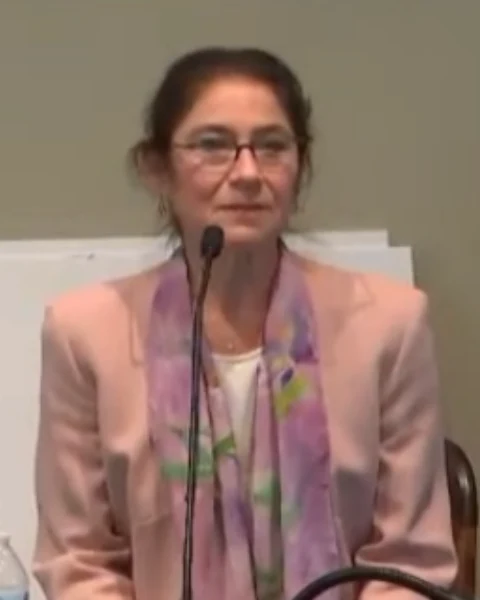
Courtroom still of Ellen Riemer.

Forensic pathologist who performed the autopsies of Paul and Maggie Murdaugh.

683 lines·19 proceedings·11 mentions

About

Ellen Riemer performed the autopsies of Paul and Maggie Murdaugh and testified as an expert in forensic pathology. She identified Paul's cause of death as shotgun wounds of the head and chest and Maggie's as multiple gunshot wounds, classifying both deaths as homicides.

Riemer described Paul's first shotgun wound as close-range and survivable. She concluded that the fatal wound entered at his left shoulder and traveled through his neck and head, while qualifying that path as her most likely explanation rather than the only possible one. She described five wounds to Maggie from at least four rifle shots, including two fatal paths involving the head, but did not present her account of the shooting sequence as a fixed crime-scene reconstruction.

The defense tested the limits of those opinions by establishing that Riemer had not reconstructed the scene and could not determine the weapon's height, a fixed shooter angle, the ammunition classification, or the precise mechanism by which most of Paul's brain was ejected. When confronted with a theory that Paul's skull defect was a contact entrance wound, she cited the absence of soot, pellet distribution, wound geometry, facial preservation, and skull condition as reasons she disagreed.

Riemer returned on rebuttal after defense pathologist Jonathan Eisenstat characterized Paul's fatal injury as a contact shot from above and disputed the direction of one of Maggie's wounds. She rejected both interpretations based on her direct examinations and the anatomical findings. Cross-examination then addressed limited photographs, the absence of a brain X-ray, incomplete pellet counting, and her failure to collect, test, or previously report material she believed was consistent with shotgun packing. She acknowledged those documentation limits but retained her wound-direction conclusions.

Trial Record (19)

20232023 Murder TrialJan 23, 2023 โ€“ Mar 3, 2023Called by prosecution

Ellen Riemer performed the autopsies of Paul and Maggie Murdaugh and testified about their wounds, causes of death, and manners of death. After the defense challenged her reconstruction limits and offered competing wound-direction theories, she reaffirmed her conclusions on rebuttal while acknowledging documentation gaps.

Day 16

DirectEllen Riemer - DirectEllen RiemerCreighton Waters2highlights165lines spoken

Summary

Ellen Riemer explained the victims' autopsy findings, wound paths, probable shot sequences, causes and manners of death, and the limits of her reconstruction; after cross was deferred, the parties addressed witness travel, the State's characterization of new GM timeline material, and the projected trial schedule.

Highlights (2)

Quoteโ€œIt did, however, cause a bruise or contusion of the left arm, and that's because, you know, the -- there's a lot of energy associated with this. It didn't actually go through the ribs but caused a contusion of the left arm. But he would have been expected to be -- continue to be standing after this. It would not have sent him to the ground.โ€— Ellen RiemerRiemer distinguished Paul's survivable first shotgun wound from the immediately fatal second wound and explained why she believed he remained standing.Open in transcript →Watch this moment ▶
Quoteโ€œSo, I don't know what happened there. But I do know that the barrel of the gun was closer at the time it struck her left thigh because the stippling is more tight concentrically and doesn't cover as wide an area as the one to the right side of the abdomen.โ€— Ellen RiemerRiemer separated what the stippling supported about relative distance from what she could not determine about the participants' movement.Open in transcript →Watch this moment ▶

Day 17

CrossEllen Riemer - CrossEllen RiemerDick Harpootlian2highlights267lines spoken

Summary

The defense pressed Ellen Riemer on scene-information gaps, uncertain wound geometry, and an alternative contact-wound theory for Paul; she acknowledged reconstruction limits but maintained her shoulder-to-head trajectory and noncontact conclusion.

Highlights (2)

Quoteโ€œShe could have turned around or not turned around, or -- I don't know if she turned around or the shooter is moving.โ€— Ellen RiemerRiemer expressly limited her ability to reconstruct the relative movement of Maggie and the shooter from the wounds alone.Open in transcript →Watch this moment ▶
Quoteโ€œI don't see any evidence of contact range discharge on the left side of the neck. So, it was not my conclusion, that was not my opinion that this is a contact shotgun wound.โ€— Ellen RiemerRiemer directly rejected the defense's proposed contact-wound interpretation of Paul's fatal injury.Open in transcript →Watch this moment ▶

Day 18

Day 19

Day 21

Day 25

Day 26

ProceduralScope of Rebuttal TestimonyMentioned

Summary

The defense challenged the proposed breadth of the State's reply case, and the judge required rebuttal to be finely tailored while reserving individual rulings for specific objections.

Mentioned in this proceeding.

DirectEllen Riemer - DirectEllen RiemerCreighton Waters3highlights25lines spoken

Summary

Ellen Riemer rebutted the defense experts' wound reconstructions, defending her conclusions that Maggie's wound traveled upward and that Paul's fatal shotgun wound entered near the shoulder rather than through a contact shot to the head.

Highlights (3)

Quoteโ€œYes. I did both the autopsies at the request of the Colleton County Coroner, who called MUSC Forensic Pathology requesting autopsies on two individuals that died under his jurisdiction. I was not asked by the prosecution to perform an autopsy. It was an independent autopsy.โ€— Ellen RiemerRiemer identified the institutional source of the autopsy request and emphasized that the prosecution did not hire her to perform the examinations.Open in transcript →Watch this moment ▶
Quoteโ€œWhat we have here is not consistent with a contact shotgun wound to the head. The damage to the head would have been much worse, even though this was already horrible.โ€— Ellen RiemerRiemer stated her central rebuttal conclusion about the defense contact-wound theory while acknowledging the severity of the existing injury.Open in transcript →Watch this moment ▶
Quoteโ€œIn my determination, this went up, through the left cheek, out the right side of the top of the head.โ€— Ellen RiemerRiemer succinctly restated the direction she assigned to Paul's fatal shotgun wound.Open in transcript →Watch this moment ▶
CrossEllen Riemer - CrossEllen RiemerDick Harpootlian2highlights166lines spoken

Summary

The defense pressed Ellen Riemer on omitted photographs, notes, brain X-rays, pellet counts, and an unreported packing-material observation; she acknowledged those limits but maintained her shoulder-to-head trajectory and noncontact-wound conclusion.

Highlights (2)

Quoteโ€œI took pictures. I wish I took more pictures now, but I took pictures.โ€— Ellen RiemerRiemer acknowledged that additional autopsy photographs would have been useful.Open in transcript →Watch this moment ▶
Quoteโ€œI don't feel comfortable answering these questions because it's not -- the specific ballistics are not my area of expertise.โ€— Ellen RiemerRiemer expressly limited her expertise when the defense proposed calculations based on pellet counts.Open in transcript →Watch this moment ▶

Day 27

ClosingClosing Argument - Creighton WatersCreighton Waters1highlightMentioned

Summary

Waters tied the State's financial-motive theory to the kennel video, digital timeline, family firearms, forensic evidence, and Alex Murdaugh's changing accounts, then asked the jury to return guilty verdicts.

Mentioned in this proceeding.

Highlights (1)

otherWaters compared the State and defense forensic reconstructions, relying on Ellen Riemer's and Kenneth Kinsey's testimony while disputing the defense theories concerning a contact wound, shooter height, and two shooters.Open in transcript →Watch this moment ▶