Skip to content
personpersonMelinda WorleyMelinda WorleySLED crime-scene agent and footwear-and-tire-impression expert who processed the Moselle kennel scene.← All People
Expert witness

Melinda Worley

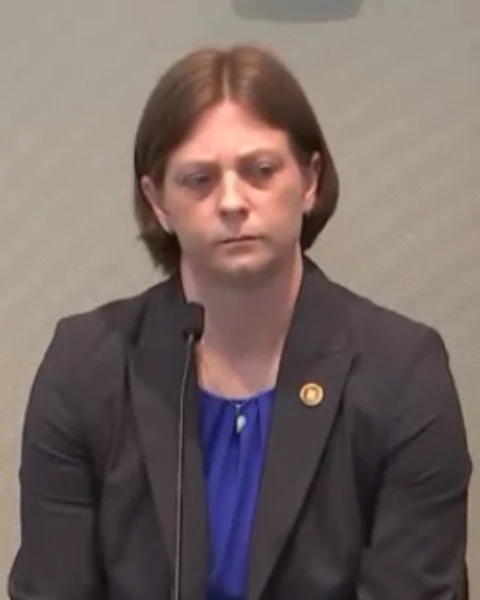
Courtroom still of Melinda Worley.

SLED crime-scene agent and footwear-and-tire-impression expert who processed the Moselle kennel scene.

810 lines·16 proceedings·11 mentions

About

Melinda Worley testified for the State as a SLED crime-scene investigator. She described documenting and mapping the Moselle kennel and feed-room area, collecting physical and biological evidence, and establishing the foundation for photographs and exhibits.

On direct examination, Worley identified fired shells, wadding, pellets, cartridge cases, projectiles, biological material, window defects, and footwear impressions. She said impressions in the feed room were consistent with the outsole design of Paul's shoes, while limiting that comparison to general design characteristics rather than identifying a particular shoe. Her later vehicle work included collecting a shell, taking presumptive blood swabs, removing the driver's seatbelt for testing, and testing Alex Murdaugh's clothing with a reagent that could also react to substances other than blood.

Defense questioning examined scene control and documentation. Worley agreed that a responder had left a bloody footprint and that the footwear impressions were not photographed using preferred procedures. She also could not explain why her notes recorded an 84-degree dog-house angle while a diagram showed 96 degrees. On recross, she acknowledged that apparent blood-like material on an ATV had not been tested, that she had not been asked to sample water around Paul, and that the method used to establish photographic scale was not the best.

Worley consistently distinguished her observations from conclusions the evidence could not support. She described her diagrams as approximate evidence-location tools rather than scale reconstruction models, declined to fix a shooter's position or determine the number of shooters from projectile paths, and treated movement or one person possessing two guns only as possibilities. She explained that her assignment was to process and document the scene, not reconstruct it.

Trial Record (16)

20232023 Murder TrialJan 23, 2023 – Mar 3, 2023Called by prosecution

Melinda Worley documented and processed the Moselle kennel scene for SLED and testified as an expert in footwear and tire impressions. She explained her evidence findings and their limits while defense questioning examined scene control, photographic methods, unsampled material, trajectory interpretations, and conflicting angle records.

Day 5

Voir DireMelinda Worley - Voir DireMelinda WorleySavannah M. Goude1highlight14lines spoken

Summary

Melinda Worley outlined her forensic experience before the court, without defense objection, accepted her as an expert in footwear and tire impressions.

Highlights (1)

Quote“I have taken two forty-hour courses related to footwear, and I have completed approximately fifty footwear cases since I was -- completed my training in 2014. I have testified as an expert witness, nine times qualified.”— Melinda WorleyWorley summarized the practical experience and prior qualifications supporting the expert-qualification request.Open in transcript →Watch this moment ▶
DirectMelinda Worley - DirectMelinda WorleySavannah M. Goude2highlights407lines spoken

Summary

Melinda Worley mapped and documented the Moselle scene, identified ballistic and footwear evidence, explained vehicle and clothing testing, acknowledged an evidence-labeling error, and established custody or exhibit status for numerous items.

Highlights (2)

Quote“We photographed them with examination quality photographs on scene. I never had any, I guess, test impressions of any tires to compare them to to do an actual comparison in a report.”— Melinda WorleyWorley expressly limited the scope of her tire-impression work and said she did not perform a formal comparison.Open in transcript →Watch this moment ▶
Quote“I just made a mistake and wrote 12 gauge instead of 16 gauge. It's clearly a 16 gauge.”— Melinda WorleyWorley acknowledged and corrected an evidence-labeling error concerning the shell recovered from the Suburban.Open in transcript →Watch this moment ▶

Day 6

CrossMelinda Worley - CrossMelinda WorleyDick Harpootlian2highlights333lines spoken

Summary

Harpootlian used Worley's scene records to challenge scene preservation, projectile-path interpretation, footwear documentation, and clothing tests, while Worley acknowledged several limitations but resisted conclusions about shooter number or location.

Highlights (2)

Quote“It just indicates there was movement to me.”— Melinda WorleyWorley gave her own restrained interpretation of the divergent projectile paths rather than adopting the defense's two-shooter premise.Open in transcript →Watch this moment ▶
Quote“It doesn't determine whether it's human or not.”— Melinda WorleyWorley identified a central limitation of the LCD reactions observed on Alex Murdaugh's clothing.Open in transcript →Watch this moment ▶
RedirectMelinda Worley - RedirectMelinda WorleySavannah M. Goude1highlight30lines spoken

Summary

Worley clarified the limits of her diagrams and footwear evidence, addressed possible shooter movement and use of two guns, and identified apparent biological matter in newly admitted ATV photographs.

Highlights (1)

Quote“It's not -- like, an inch on there is not an inch in real life. It's just an approximation of where everything was in relation to each other.”— Melinda WorleyWorley cautioned that the diagram could show relative positions but not actual dimensions.Open in transcript →Watch this moment ▶
RecrossMelinda Worley - RecrossMelinda WorleyDick Harpootlian2highlights26lines spoken

Summary

Worley acknowledged uncollected suspected blood-like material, defined limits on the footwear comparison and photographic scale, and said her role did not include crime-scene reconstruction.

Highlights (2)

Quote“To determine the outsole design of the impression. I wouldn't have been able to identify it.”— Melinda WorleyWorley distinguished a general outsole-design comparison from an identification, defining the limit of her footwear conclusion.Open in transcript →Watch this moment ▶
Quote“We don't necessarily do that ourselves. We process the crime scene and document it, but we don't do reconstructions.”— Melinda WorleyWorley described the boundary between her scene-processing work and crime-scene reconstruction.Open in transcript →Watch this moment ▶

Day 8

Day 9

DirectKatie McCallister - DirectKatie McCallisterSavannah M. Goude1highlightMentioned

Summary

Katie McCallister described preserving Maggie Murdaugh's recovered phone, conducting a consent search of the Moselle house, transferring collected weapons and ammunition, and witnessing the collection of Buster Murdaugh's admitted buccal swab.

Mentioned in this proceeding.

Highlights (1)

evidence eventMcCallister described documenting and transferring three shotguns, a .300 Blackout rifle, and ammunition from the house to SLED crime-scene agent Melinda Worley.Open in transcript →Watch this moment ▶

Day 10

Day 19

Day 21

DirectMike Sutton - DirectMike SuttonDick HarpootlianMentioned

Summary

Mike Sutton presented defense reconstructions of the shooting trajectories, gunshot audibility, and vehicle evidence, opining that the quail-pen shot most likely came from a short, low-positioned shooter and was very unlikely to have been fired by Alex Murdaugh.

Mentioned in this proceeding.

CrossMike Sutton - CrossMike SuttonDavid A. FernandezMentioned

Summary

The prosecution challenged Mike Sutton's qualifications, unlabeled graphs, acoustic-test inputs, projectile assumptions, and short-shooter renderings; Sutton acknowledged several limits but maintained that his engineering analysis supported low firing positions and faint gunshot audibility inside Moselle.

Mentioned in this proceeding.

RedirectMike Sutton - RedirectMike SuttonDick HarpootlianMentioned

Summary

Mike Sutton defended his trajectory and acoustic analyses, used newly admitted SLED crime-scene notes to explain projectile paths, acknowledged limits in his perspective and source data, and reaffirmed his opinion that Alex Murdaugh could not have fired the quail-pen shot under the stated firing-position assumptions.

Mentioned in this proceeding.

Day 22

CrossKenneth Zercie - CrossKenneth ZercieJohn MeadorsMentioned

Summary

The State tested Kenneth Zercie's limited case review, lack of a written report, methodology, compensation, and footwear opinions; he agreed with the State examiner's qualified findings while maintaining that inadequate photographs prevented definitive comparisons.

Mentioned in this proceeding.

Day 26