Kenneth L. Kinsey testified twice for the State as a crime-scene reconstruction expert, offering a qualified account of the shootings, movement at the feed room, physical impressions, and Paul's phone position. Cross-examination focused on the changed scene, unavailable weapons, measurement limits, and competing defense reconstructions.
Expert witness
Kenneth L. Kinsey
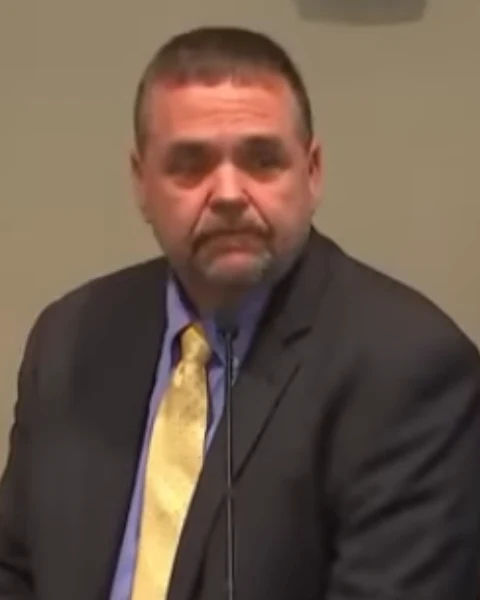
Crime-scene reconstruction expert retained by the State to analyze the shootings, physical evidence, and movement around the Moselle kennels.
Appeared2023 Murder Trial
899 lines·14 proceedings·6 mentions
About
Kenneth L. Kinsey testified for the State as a crime-scene reconstruction expert during both its initial case and its reply to defense experts. His qualification testimony covered about thirty years in law enforcement, twenty-two years focused on crime scenes and violent deaths, more than 800 death-scene investigations, forensic training, and prior expert work. He also identified fabric-impression analysis as an area of limited experience.
Kinsey described reviewing forensic reports, photographs, and measurements before inspecting the scene later in the investigation. He reconstructed Paul as sustaining a non-immediately-fatal shotgun wound inside the feed room, moving toward the doorway, and then receiving an immediately incapacitating wound near the doorway before falling outside. He also opined that another person placed Paul's phone on the back of his pants because Paul could not have retrieved it after the fatal wound and an ordinary fall would not usually have left it there.
Kinsey placed express limits on several conclusions. He gave little weight to the rifle-casing locations without the rifle and matching-ammunition testing, acknowledged that a similar tire could have made the impression associated with Maggie's calf, and did not assign a precise time or mechanism to that contact. Cross-examination emphasized his late involvement, objects that had been moved, a pressure-washed door, estimated measurements, and the limits of interpreting photographed footwear and tire impressions. He maintained that the blood trail and footwear evidence indicated movement toward the doorway while acknowledging the constraints created by the changed scene and unavailable weapons.
Defense counsel also challenged the orientation of an easel demonstration and questioned Kinsey about the shotgun barrel's position. After defense experts offered competing opinions involving an overhead contact shot, shooter height, and two shooters, Kinsey returned during the State's reply case to address those alternatives.
Trial Record (14)
No proceedings match this filter.