Jonathan Eisenstat testified for the defense as a forensic-pathology expert who reviewed the autopsy materials and disputed the interpretation of one of Maggie Murdaugh's wounds and Paul Murdaugh's fatal head wound. Cross-examination addressed his paid secondary review, lack of a written report, missing documentation, and the limits of his expertise.
Expert witness
Jonathan Eisenstat
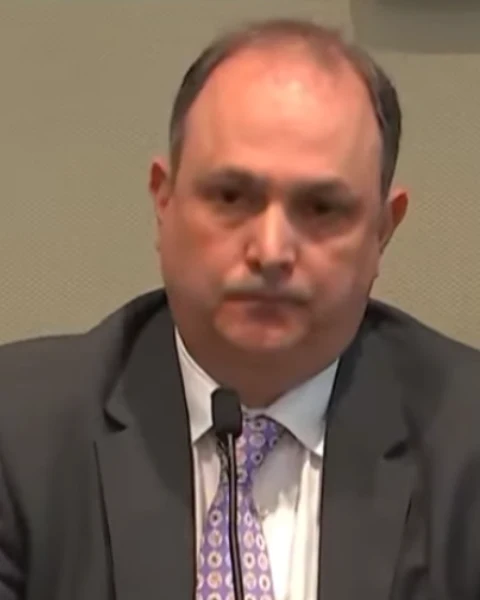
Forensic pathologist retained by the defense to review the autopsies of Paul and Maggie Murdaugh.
Appeared2023 Murder Trial
300 lines·6 proceedings·3 mentions
About
Jonathan Eisenstat testified for the defense as an expert in forensic pathology after reviewing autopsy reports, photographs, diagrams, and x-rays. He did not perform either autopsy. He also explained the limits of time-of-death estimates, including the need for core and ambient temperature measurements to conduct a meaningful temperature analysis.
Eisenstat largely agreed with the assessments of Maggie Murdaugh's rifle wounds but disputed the direction assigned to one wound. His main disagreement concerned Paul Murdaugh's fatal head injury, which he interpreted as a contact shotgun wound entering from the top-back of the head and traveling downward toward the left shoulder. He said that such a wound would produce biological blowback.
The prosecution challenged the foundation and independence of his conclusions. Eisenstat acknowledged that he relied on Ellen Riemer's autopsy materials, had prepared no written report, had not reviewed a brain x-ray or an isolated photograph of the brain, and expected his compensation to exceed $10,000 by the end of the day. He defended his pellet-path analysis and explained that an opinion involving an elevated shooter position depended on Maggie's posture, not necessarily the shooter's height.
Eisenstat repeatedly limited his expertise to projectile entrance, exit, and direction within the body rather than trajectory outside the body or broader crime-scene reconstruction. His contact-wound interpretation remained disputed: Kenneth Kinsey later maintained a shoulder-to-neck-to-head reconstruction and acknowledged that the two opinions could not both be correct. Eisenstat classified both deaths as homicides.
Trial Record (6)
No proceedings match this filter.