Skip to content
personpersonTom DarnellTom DarnellFingerprint-analysis expert who processed submitted firearms, ammunition, and phone evidence in the laboratory.← All People
Expert witness

Tom Darnell

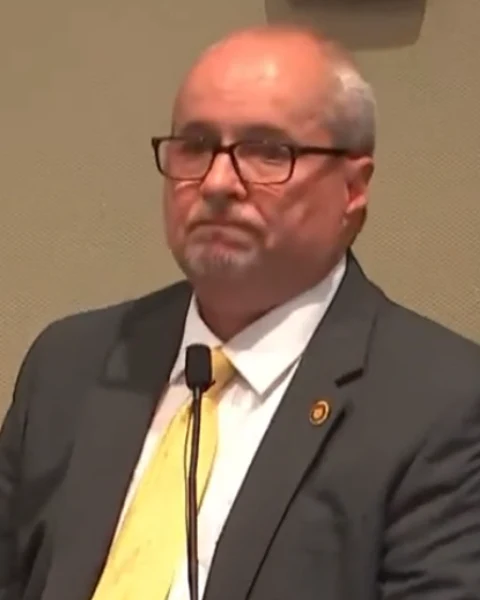
Courtroom still of Tom Darnell.

Fingerprint-analysis expert who processed submitted firearms, ammunition, and phone evidence in the laboratory.

96 lines·4 proceedings

About

Tom Darnell testified for the State about his laboratory examination of firearms, ammunition, and a phone.

Darnell explained the methods used to develop and compare latent prints, including Superglue fuming, fluorescent staining, alternate light sources, and photography. He observed no fingerprint evidence on six .300 Blackout casings, two shotshells, the Benelli shotgun, or the individual cartridges from a loaded magazine. Other firearms and the magazine produced results of no value for comparison, while the phone showed finger contact but lacked enough clear detail for comparison. He identified the phone only through laboratory records as an evidence item and did not independently confirm its owner.

Darnell also collected touch-DNA swabs from selected firearm surfaces, two shotshell head stamps, and the phone. His examination did not supply the later DNA-analysis results.

Cross-examination established that Darnell processed only evidence delivered to the laboratory, did not attend the homicide scene, and had not reviewed the scene team's notes. He could not say what investigators processed at the scene. He explained that contact does not necessarily produce a recoverable print and that heat, friction, weather, later handling, and insufficient perspiration can affect recovery. He also distinguished an item with no observed fingerprint evidence from one bearing print evidence that lacked value for comparison.

On redirect, Darnell explained that crime-scene personnel and latent-print examiners worked in separate departments and that scene personnel were trained to process items that could not be transported. He testified that no bloody prints were submitted to him, but did not offer a conclusion about whether any were found or processed at the scene.

Trial Record (4)

20232023 Murder TrialJan 23, 2023 – Mar 3, 2023Called by prosecution

Tom Darnell testified for the State as a fingerprint-analysis expert about laboratory processing of submitted firearms, ammunition, and a phone. His testimony described the latent-print findings, touch-DNA swab collection, and the limits of what his laboratory work could establish about processing at the scene.

Day 10

DirectTom Darnell - DirectTom DarnellSavannah M. Goude2highlights44lines spoken

Summary

Tom Darnell reported no identifiable fingerprints on the examined firearms, ammunition, magazine, or phone and described the touch DNA swabs admitted as State's Exhibits 307, 308, and 309.

Highlights (2)

Quoteβ€œActually I did not. There was what we call -- the result that I used with these items was that there was no fingerprint evidence was observed.”— Tom DarnellDarnell stated the examination result for the six .300 Blackout shell casings while preserving the transcript's distinction between an examination and a positive identification.Open in transcript →Watch this moment ▶
Quoteβ€œI can't recall that I have developed anything that I could identify. I have developed ridge detail, or I have developed fingerprints on cartridge cases, but I can't recall honestly having a case where I was able to actually identify it.”— Tom DarnellDarnell qualified the practical value of cartridge-case fingerprints based on his approximately thirty years of experience.Open in transcript →Watch this moment ▶
CrossTom Darnell - CrossTom DarnellDick Harpootlian2highlights43lines spoken

Summary

On cross-examination, Tom Darnell explained the limits of his laboratory examination, distinguished absent prints from prints unsuitable for comparison, and addressed how crime-scene fingerprint work should ordinarily be documented.

Highlights (2)

Quoteβ€œI honestly don't know. I did not look at their notes from their crime scene or what have you. I really had no real reason to. I was just asked to process the things that they brought me.”— Tom DarnellDarnell defined the limits of his knowledge: he performed laboratory processing and had not reviewed the crime-scene team's work.Open in transcript →Watch this moment ▶
Quoteβ€œWell, I found -- any time I report something as no value for comparison, that means that I did find evidence of fingerprints. It just wasn't enough to compare it to anyone. Any time I say nothing was observed, that means there was nothing observed.”— Tom DarnellThis clarified the materially different meanings of two result categories used in Darnell's fingerprint reports.Open in transcript →Watch this moment ▶
RedirectTom Darnell - RedirectTom DarnellSavannah M. Goude1highlight4lines spoken

Summary

Tom Darnell clarified that crime-scene personnel receive some fingerprint-processing training and that no bloody prints were submitted to him in this case.

Highlights (1)

Quoteβ€œI was not submitted any bloody prints in this case.”— Tom DarnellDarnell limited his testimony to what was submitted to him rather than stating whether bloody prints existed or were found at the scene.Open in transcript →Watch this moment ▶