Skip to content
personpersonMichael KnechtMichael KnechtVerizon records custodian who authenticated cellular records associated with Alex and Maggie Murdaugh.← All People
Witness

Michael Knecht

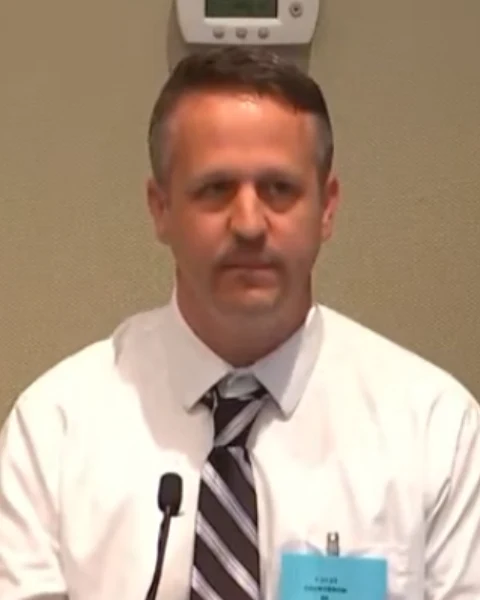
Courtroom still of Michael Knecht.

Verizon records custodian who authenticated cellular records associated with Alex and Maggie Murdaugh.

258 lines·4 proceedings

About

Michael Knecht testified for the State as a Verizon records custodian, authenticating cellular records for Alex, Maggie, Paul, Claude Rowe, Marty Cook, Rogan Gibson, Connor Cook, and Buster Murdaugh. Knecht then explained fields showing call time, direction, duration, network technology, towers, and cell faces.

Applying those fields, Knecht testified that an incoming call to Maggie's number at 9:04:24 p.m. went to voicemail and contained no tower information on her side of the record. Alex's corresponding record showed an outgoing call to her number with tower information. Knecht identified 7:50 p.m. as Maggie's last outgoing call and said the later incoming calls he reviewed were unanswered and routed to voicemail.

On cross-examination, Knecht corrected several proposed descriptions of Verizon's MO, MT, and MF call codes. He also addressed separately produced text-message records, Verizon's approximate 18-month retention period for detailed billing records, and the limits of network-ringing information. He explained that audible ringing may reflect the network attempting to locate a phone rather than the phone itself physically ringing, and he could not determine the full scope of the search warrant without reviewing it.

On redirect and recross, Knecht further defined the limits of the records. He said the same voicemail entry could result when a phone rang unanswered, was turned off, or was otherwise disconnected, so the entry did not establish the phone's condition. He also testified that the reviewed data contained tower information rather than specific GPS data and declined to interpret cell-tower triangulation because it was outside his qualifications.

Trial Record (4)

20232023 Murder TrialJan 23, 2023 โ€“ Mar 3, 2023Called by prosecution

Michael Knecht testified for the State as a Verizon records custodian, authenticating cellular records and explaining call-detail fields used to examine calls involving Alex and Maggie Murdaugh. He also defined the evidence's limits, including that voicemail routing did not establish a phone's condition and tower entries were not specific GPS or triangulation evidence.

Day 7

DirectMichael Knecht - DirectMichael KnechtJohn B. Conrad2highlights186lines spoken

Summary

Verizon custodian Michael Knecht authenticated nine exhibits and explained records showing a 9:04:24 p.m. call from Alex Murdaugh's account to Maggie's phone that went to voicemail.

Highlights (2)

Quoteโ€œIn response to a search warrant, Verizon provides a key to be able to read their records that were provided, so this particular record is VoLTE call detail record key.โ€— Michael KnechtKnecht explained the purpose of the interpretive key used throughout his testimony about Verizon's call-detail records.Open in transcript →Watch this moment ▶
Quoteโ€œWell, the call didn't actually connect to a cell tower. When the call didn't answer, it routed to voice mail. It's an internal routing, so there would be no cellular data as far as cell tower information provided.โ€— Michael KnechtThe testimony identified an important limitation in interpreting the unanswered call to Maggie's phone: voicemail routing produced no tower information on that side of the record.Open in transcript →Watch this moment ▶
CrossMichael Knecht - CrossMichael KnechtDick Harpootlian2highlights61lines spoken

Summary

Michael Knecht clarified Verizon call and voicemail codes, identified the last outgoing and answered-call activity in Maggie Murdaugh's reviewed records, and explained limits involving text records, retention, and network ringing.

Highlights (2)

Quoteโ€œThe 23:40 call went to voice mail. Then the next call log after that is mobile originated, which means there were two outbound calls made. And then after those two calls, the rest of the calls were routed to mobile telephone number 9041's voice mail.โ€— Michael KnechtKnecht summarized the sequence reflected in Maggie Murdaugh's call records and distinguished two outbound calls from the later calls routed to voicemail.Open in transcript →Watch this moment ▶
Quoteโ€œWell, it depends on how long it takes the network to locate the call. So, when you hear a ring when you're dialing someone, it's really just the network trying to locate. So, the phone itself may never ring if the network can't find you.โ€— Michael KnechtKnecht cautioned that audible ringing does not necessarily establish that the recipient's phone physically rang.Open in transcript →Watch this moment ▶
RecrossMichael Knecht - RecrossMichael KnechtDick Harpootlian1highlight7lines spoken

Summary

Michael Knecht confirmed that the reviewed Verizon records lacked specific GPS data and disclaimed expertise in cell-tower triangulation.

Highlights (1)

Quoteโ€œI would have no way as knowing. I'm not qualified as far as the triangulation of cell tower information.โ€— Michael KnechtExpressly limits the witness's expertise and his ability to interpret tower data as a precise location.Open in transcript →Watch this moment ▶