Skip to content
personpersonMatthew WildMatthew WildFBI cellular-analysis expert who mapped historical activity associated with the Murdaugh phones.← All People
Expert witness

Matthew Wild

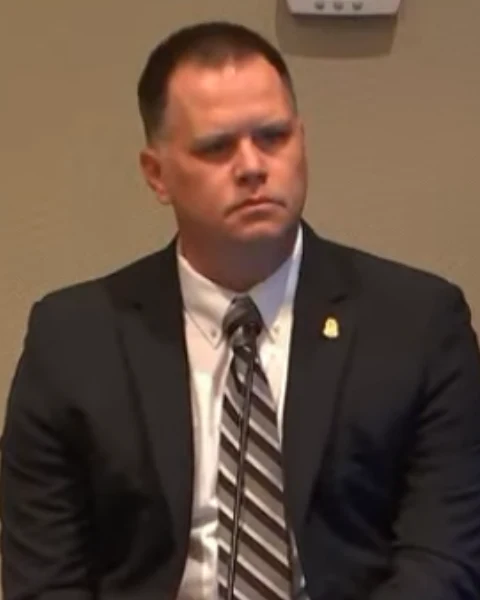
Courtroom still of Matthew Wild.

FBI cellular-analysis expert who mapped historical activity associated with the Murdaugh phones.

359 lines·4 proceedings

About

Matthew Wild testified for the State as an FBI supervisory special agent assigned to the Cellular Analysis Survey Team.

On direct examination, Wild explained how he combined Verizon call-detail records, historical tower lists, Cellebrite device data, round-trip-time estimates, and drive testing. He mapped activity associated with Paul Murdaugh's phone around Moselle and the kennels, including a media-location entry connected to the kennel video. He also traced Maggie Murdaugh's phone toward Moselle through its final useful tower record at 7:50 p.m. and described sectors used by Alex Murdaugh's phone around Moselle, Almeda, nearby routes, and the 10:06 p.m. 911 call. His drive test showed that the tower carrying the 911 call covered Moselle, but he did not identify Moselle as the call's proven origin.

Wild repeatedly described the analysis's limits. Tower sectors overlap and do not establish exact locations, low-precision points were omitted, and the records show activity associated with a device rather than who possessed it. He also distinguished cellular records from GPS tracking and described the entries as record activations rather than "pings."

Cross-examination established that Verizon text records lacked tower-location information, later tower handoffs during calls would not appear, and no relevant GPS data existed for Maggie's or Alex's phone during the period at issue. Wild had not performed an analysis showing the phones moving together. On redirect, he explained that such a comparison requires approximately simultaneous activity and said the absence of tower-location information for Maggie's phone after 7:50 p.m. prevented him from determining whether it was near another phone after that time.

Trial Record (4)

20232023 Murder TrialJan 23, 2023 – Mar 3, 2023Called by prosecution

Matthew Wild testified as an FBI cellular-analysis expert, mapping historical activity associated with the Murdaugh phones while explaining that tower records indicate approximate coverage rather than exact locations or who held a device. Cross-examination and redirect further established the missing data and limits on comparing the phones.

Day 15

Voir DireMatthew Wild - Voir DireMatthew WildJohn B. Conrad1highlight14lines spoken

Summary

Matthew Wild described his FBI CAST duties, training, and prior expert qualifications before the defense declined to object and the court qualified him in historical cell-phone location analysis.

Highlights (1)

DirectMatthew Wild - DirectMatthew WildJohn B. Conrad1highlight298lines spoken

Summary

Matthew Wild mapped Paul, Maggie, and Alex Murdaugh's phones using call records, device data, and drive tests, while stressing that the records did not identify who held a device. He found the 911 call compatible with a Moselle location despite its use of a Varnville-area tower and traced Alex's phone through Almeda-, Summerville-, and Hampton-area sectors from June 8-15.

Highlights (1)

Quoteβ€œThat's correct. I have no idea whose hand that phone was in all during each one of these calls. All we know is that was the phone that we believe he was using.”— Matthew WildWild expressly separated a phone's inferred location from the identity of the person possessing it.Open in transcript →Watch this moment ▶
CrossMatthew Wild - CrossMatthew WildPhillip D. Barber1highlight42lines spoken

Summary

Matthew Wild identified limits in the Verizon maps, including missing text-message location data, unrecorded tower handoffs, no relevant GPS data for Maggie or Alex, and no phone-movement comparison. He also clarified the 911 timestamp difference, the report's June 15 endpoint, and the limited scope of his confirmed third-party phone review.

Highlights (1)

Quoteβ€œSo, it would -- it look the same way it looks like now. So, again, when -- before the call is even set up -- so, if my phone was on in this room right now, my phone is constantly scanning the environment. It's trying the tower and sector with the strongest signal. Okay? It's very much like sitting in the airport trying to find the best Wi-Fi to connect to while you're waiting on your flight. So, what happens with a call hands off between towers during a call is the records like look they look. It's still going to show the initial tower and sector that the phone saw as the best tower and sector at the time the call occurred, and then after that -- let's say the call is an hour long and I drive from here to Columbia. You know, I'm going to hand off tower to tower to tower, but on Verizon I'm not going to see that hand off in the records.”— Matthew WildWild explained that Verizon records show the initial tower and sector but not subsequent handoffs, limiting what a map can reveal about movement during a call.Open in transcript →Watch this moment ▶
RedirectMatthew Wild - RedirectMatthew WildJohn B. Conrad1highlight5lines spoken

Summary

Matthew Wild clarified that the absence of Verizon tower-location data for Maggie Murdaugh's phone after 7:50 p.m. prevented him from comparing its location with another phone.

Highlights (1)

Quoteβ€œI mean, first of all, the two phones have to have activity around the same time, so you would have to have calls at 9:00 on one phone and calls at 8:58 or 9:00 on the next phone. That's first thing you would have to do. The second thing is it would have to be indication the phones were traveling together or stationary at the same place at the same time.”— Matthew WildWild states the conditions necessary to compare the locations of two phones, providing the methodological basis for his inability to make that comparison here.Open in transcript →Watch this moment ▶