Skip to content
personpersonSara ZapataSara ZapataSLED DNA-analysis expert who examined firearms, ammunition, clothing, vehicle, and fingernail evidence.← All People
Expert witness

Sara Zapata

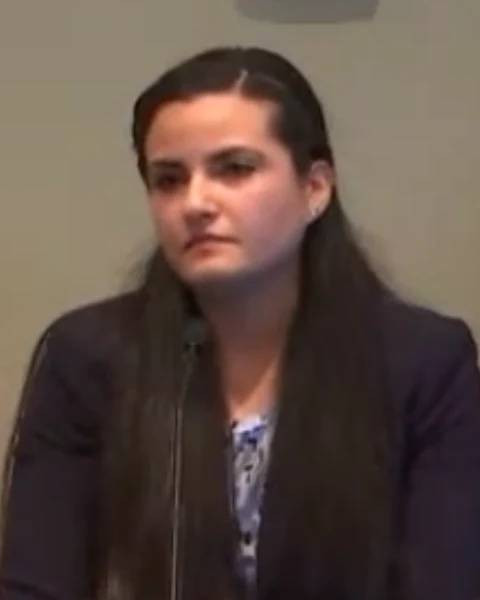
Courtroom still of Sara Zapata.

SLED DNA-analysis expert who examined firearms, ammunition, clothing, vehicle, and fingernail evidence.

344 lines·6 proceedings·1 mention

About

Sara Zapata testified for the State as a SLED forensic scientist. She explained touch DNA, mixed profiles, STRmix likelihood ratios, and the limits of drawing conclusions about body-fluid source, timing, or transfer from a DNA result.

On direct examination, Zapata presented DNA comparisons involving ammunition, firearms, vehicle and clothing samples, fingernail clippings, and other collected evidence. Her results supported Margaret Murdaugh or Paul Murdaugh as contributors to several items and supported both Margaret and Richard Alexander Murdaugh in one mixed profile. The raincoat produced no interpretable contributor result.

Testing of the white T-shirt became a central subject of examination. Zapata reported that confirmatory Hematrace testing found no human blood on the tested shirt items despite earlier presumptive positives. She discussed research concerning possible interaction with LCV but declined to interpret alleged blood-spatter patterns because that analysis was outside her expertise. Later testimony linked her confirmatory report to the correction of an earlier grand-jury representation about blood spatter on the shirt.

The defense also questioned Zapata about three low-level foreign alleles beneath one set of Margaret Murdaugh's fingernail clippings. She said one indicated a male contributor and excluded Paul and Alex Murdaugh, but the limited profile was insufficient for CODIS and could not establish when or how the DNA arrived. On redirect and recross, she reiterated that DNA analysis cannot determine the time or manner of deposit and agreed that touch DNA arising from the ordinary-contact scenarios posed by the defense would not be uncommon.

Trial Record (6)

20232023 Murder TrialJan 23, 2023 โ€“ Mar 3, 2023Called by prosecution

Sara Zapata testified as a SLED DNA-analysis expert about comparisons involving firearms, ammunition, clothing, vehicle, and fingernail evidence, while explaining the limits of determining body-fluid source, timing, or transfer. She also reported that confirmatory testing found no human blood on the tested shirt items.

Day 16

CrossSara Zapata - CrossSara ZapataPhillip D. Barber3highlights163lines spoken

Summary

Zapata acknowledged low-level foreign male DNA under Margaret Murdaugh's fingernails, explained why it was not suitable for CODIS, and defended the limits of DNA-source conclusions while confirming negative Hematrace results from the sampled white T-shirt items.

Highlights (3)

Quoteโ€œWe can't really tell you how or when the DNA got there, but at any point in time between getting her nails done and arriving home, she could touch an object and potentially DNA from the object could be under her fingernails, or she can touch an individual and no DNA be under her fingernails in that way.โ€— Sara ZapataZapata emphasized that the low-level foreign DNA did not establish when, how, or through whom it was deposited.Open in transcript →Watch this moment ▶
Quoteโ€œFor all of those cuttings for the different items, they were all put together into that tube for that item, and for all of those tests the result was negative.โ€— Sara ZapataThis captured both the item-level testing method and the negative Hematrace results central to the defense's cross-examination.Open in transcript →Watch this moment ▶
Quoteโ€œI can't really answer anything about the misting pattern because that is not my area of expertise. But one possibility for a negative hematrace test is that the blood present on the item is not human blood because hematrace is a confirmatory test for the presence of human blood, but also reacts to ferret blood and higher primate blood.โ€— Sara ZapataZapata separated her confirmatory-testing expertise from blood-pattern interpretation while identifying a qualified non-human-blood explanation for a negative test.Open in transcript →Watch this moment ▶
RecrossSara Zapata - RecrossSara ZapataPhillip D. Barber1highlight4lines spoken

Summary

Sara Zapata agreed that ordinary contact could account for a deceased person's touch DNA on an object or a wife's touch DNA on her husband's shirt.

Highlights (1)

testimony highlightOn recross, Sara Zapata answered two defense hypotheticals by agreeing that finding the deceased person's touch DNA on an object touching the person, or a wife's touch DNA on her husband's shirt, would not be uncommon.Open in transcript →Watch this moment ▶

Day 18