Skip to content
personpersonKenneth ZercieKenneth ZercieCrime-scene investigation expert retained by the defense to review scene processing and footwear-impression evidence.← All People
Expert witness

Kenneth Zercie

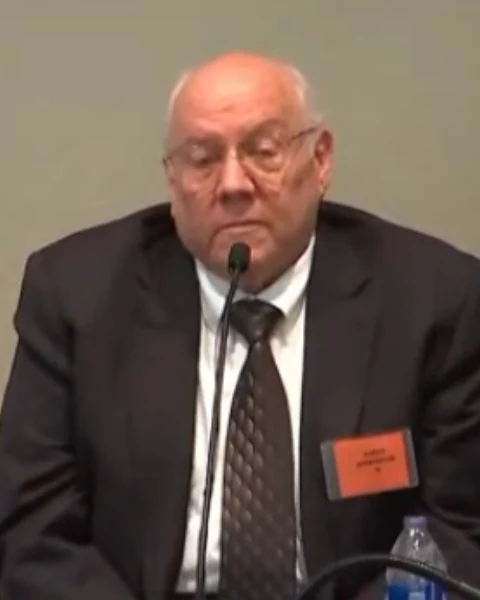
Courtroom still of Kenneth Zercie.

Crime-scene investigation expert retained by the defense to review scene processing and footwear-impression evidence.

404 lines·5 proceedings

About

Kenneth Zercie testified for the defense as an expert in crime-scene investigation and related forensic disciplines. Drawing on body-camera footage, photographs, reports, and other materials he reviewed, he assessed how the Moselle scene had been protected, documented, and processed.

On direct examination, Zercie described accepted practices for contamination control, analytical photography, fingerprint development, trace-evidence preservation, and impression enhancement. He criticized entry into the feed room without protective footwear, said clothing and coverings associated with Paul and Maggie should have been preserved separately, and found no indication in the materials he reviewed of certain fingerprint, floor-sampling, and footwear-photography work. He concluded that substantially more processing could have been performed.

Cross-examination established the limits of his review. Zercie had not received the complete case file, visited the scene, interviewed witnesses, or prepared a written report, and he could not evaluate work that was absent from the materials he examined. He also disclosed his compensation and corrected his mistaken reading of the State examiner's footwear worksheet.

Zercie agreed with the State examiner's qualified footwear analysis: the photographs allowed comparisons of general outsole characteristics, but poor detail, missing scale, and possible contamination prevented a definitive conclusion. On redirect, he maintained that accepted protection, enhancement, and photography methods could have produced more useful detail under appropriate conditions, while acknowledging that he could not determine when the impressions were made or identify a particular shoe as their source.

Trial Record (5)

20232023 Murder TrialJan 23, 2023 – Mar 3, 2023Called by defense

Kenneth Zercie testified for the defense as a crime-scene investigation expert, criticizing aspects of evidence preservation, scene processing, and footwear-impression photography. His opinions remained limited to the materials he reviewed, and he agreed that the footwear evidence supported general pattern comparisons rather than identification of a particular shoe.

Day 22

DirectKenneth Zercie - DirectKenneth ZercieDick Harpootlian3highlights188lines spoken

Summary

Kenneth Zercie identified shortcomings in contamination control, evidence preservation, fingerprint and blood processing, and footwear photography, while the court barred speculation that additional work might have produced exculpatory evidence.

Highlights (3)

Quoteβ€œIt's to keep your shoes from contaminating the scene with any residue that may be on them. And secondly, also not to allow the imprint pattern from your footwear to contaminate the scene.”— Kenneth ZercieZercie explained the forensic purpose of protective footwear while reviewing body-camera footage from the feed room.Open in transcript →Watch this moment ▶
Quoteβ€œThey were suitable for pattern identification, like gross pattern, but not as far as the detailed, individualizing, accidental characteristic that might be present.”— Kenneth ZercieZercie distinguished the limited information available from the scene photographs from the detail needed for an individualizing footwear comparison.Open in transcript →Watch this moment ▶
Quoteβ€œCorrect. I think much more could have been done.”— Kenneth ZercieZercie gave his central opinion about the completeness of the crime-scene processing while avoiding a conclusion about what additional work would have found.Open in transcript →Watch this moment ▶
CrossKenneth Zercie - CrossKenneth ZercieJohn Meadors2highlights158lines spoken

Summary

The State tested Kenneth Zercie's limited case review, lack of a written report, methodology, compensation, and footwear opinions; he agreed with the State examiner's qualified findings while maintaining that inadequate photographs prevented definitive comparisons.

Highlights (2)

Quoteβ€œI have been qualifying that question each time he said that the records that were made available to me. The entire case jacket was not made available.”— Kenneth ZercieZercie expressly limited his opinions to the subset of case materials supplied for his review.Open in transcript →Watch this moment ▶
Quoteβ€œNo. In fact, I agree with her comments about the limitations that were placed on her to do the analysis.”— Kenneth ZercieZercie agreed with Agent Worley's stated analytical limitations rather than disputing her footwear examination.Open in transcript →Watch this moment ▶
RedirectKenneth Zercie - RedirectKenneth ZercieDick Harpootlian2highlights16lines spoken

Summary

Kenneth Zercie criticized the handling and photography of footwear impressions but said he could not date the prints or identify a particular shoe as their source.

Highlights (2)

Quoteβ€œIf there was a blood-like substance present, and more especially in and around the partial print that were visible, it could give you additional detail and further enhance the pattern design, and hopefully give you individualizing characteristics for comparison at a later date. The difficulty with this whole case is I can't tell you when those prints were put there.”— Kenneth ZercieZercie described the potential value of chemical enhancement while expressly limiting his ability to date the impressions.Open in transcript →Watch this moment ▶
Quoteβ€œThat shoe or any other pattern similar to that could have made it.”— Kenneth ZercieZercie clarified that pattern consistency did not identify a particular shoe as the source of the impression.Open in transcript →Watch this moment ▶