Skip to content
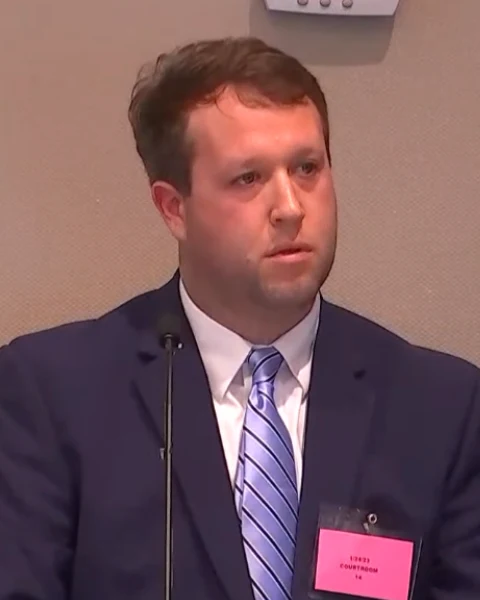
personpersonPaul GreerPaul GreerSLED firearms and tool-mark expert who compared the submitted guns, shotshells, and cartridge cases.← All People
Expert witness

Paul Greer

Courtroom still of Paul Greer.

SLED firearms and tool-mark expert who compared the submitted guns, shotshells, and cartridge cases.

554 lines·10 proceedings·3 mentions

About

Paul Greer testified for the State as a SLED firearms and tool-mark examiner. During an admissibility hearing, he described his scientific education, examiner training, proficiency testing, comparison methods, laboratory accreditation, and verification procedures. Judge Newman admitted his report and opinions, ruling that the defense's methodological criticisms concerned cross-examination and evidentiary weight rather than exclusion.

Before the jury, Greer explained his examination of submitted firearms, shotshells, and cartridge cases. He concluded that two shotshells recovered near the kennel feed or storage room were fired by the same firearm, but he could not determine that the submitted camouflage Benelli shotgun fired them. He also identified six submitted cartridge cases as having been fired by the tested .300 Blackout rifle, while other firearm comparisons discussed during cross-examination remained inconclusive.

Greer separately found that specified .300 Blackout cases recovered near Margaret Murdaugh, the house, and a shooting area bore marks showing that they had been loaded into, extracted from, and ejected from the same firearm. He acknowledged that a firearm can produce cycling marks without firing and that he could not determine when the cycling occurred. He also described a feeding failure during testing of the submitted rifle and said he did not investigate its cause further.

The defense challenged the absence of a numerical matching threshold, the subjective judgment involved in pattern comparison, the research available to Greer, and the lack of an independent report from the second examiner. Greer acknowledged published concerns about reproducibility, study design, and foundational validity while defending the discipline through trained microscopic comparison, research, proficiency testing, laboratory controls, and blind verification. On redirect, he explained that an inconclusive result leaves both the examined firearm and other firearms with similar characteristics as possible sources, while maintaining his narrower conclusion that specified cases shared a prior cycling history.

Trial Record (10)

20232023 Murder TrialJan 23, 2023 โ€“ Mar 3, 2023Called by prosecution

Paul Greer testified as the State's SLED firearms and tool-mark expert, comparing submitted firearms, shotshells, and cartridge cases while explaining the limits of his findings. He linked specified cases through shared cycling marks but did not identify the submitted shotgun or rifle as the source of the scene ammunition.

Jury Selection Day 2

ProceduralPretrial Motions and Evidentiary Issues1highlightMentioned

Summary

Judge Newman deferred rulings on several evidentiary issues, declined to admit proposed motive evidence in advance, and moved to a hearing on contested firearms-identification testimony.

Mentioned in this proceeding.

Highlights (1)

evidence eventThe defense challenged the foundation and permissible certainty of Paul Greer's cartridge-case comparison opinion; both sides said they were ready for an evidentiary hearing.Open in transcript →Watch this moment ▶
DirectPaul Greer - DirectPaul GreerDavid A. Fernandez1highlight42lines spoken

Summary

Paul Greer acknowledged scientific critiques of firearms identification while explaining how examiner training and SLED laboratory controls addressed National Academies recommendations and supported his response to the PCAST report.

Highlights (1)

Quoteโ€œOne of the issues that they noted was that firearms analysis falls short of the criteria for foundational validity because there is only a single appropriately designed study to measure the reliability of firearm and tool mark analysis. The other was that they had issue with those studies and how they were designed. Another issue was brought forth to firearm and tool mark examiners where our -- the methods in which we arrive at our conclusions, that is to include the subjective and objective measures that we take to arrive at those conclusions.โ€— Paul GreerGreer expressly stated the PCAST report's principal challenges to the foundational validity and methodology of firearms analysis.Open in transcript →Watch this moment ▶
CrossPaul Greer - CrossPaul GreerJim Griffin4highlights63lines spoken

Summary

Paul Greer said the scene cartridge cases could not be linked conclusively to Item 33, defended his same-firearm cycling conclusion and SLED's blind verification, and acknowledged subjective and caliber-specific limits in the methodology.

Highlights (4)

Quoteโ€œI'm able to determine that those cartridge cases had matching mechanism marks listed there, but in comparisons with the Item 33 rifle, I am unable to determine if they had been fired by that rifle or not.โ€— Paul GreerGreer distinguished his same-firearm cycling conclusion from any determination that Item 33 fired the cartridge cases.Open in transcript →Watch this moment ▶
Quoteโ€œThere can be marks left on an unfired cartridge due to that process without having firing the cartridge.โ€— Paul GreerGreer explained that extractor and ejector marks may arise when a cartridge is cycled without being fired.Open in transcript →Watch this moment ▶
Quoteโ€œThere is not a policy for counting those lines, as we rely on the pattern matching method which is accepted throughout our field.โ€— Paul GreerGreer acknowledged that SLED did not use a numerical threshold for the matching lines underlying his conclusion.Open in transcript →Watch this moment ▶
Quoteโ€œSo, in short, firearms -- the identification portion is subjective in nature, but it's based on the applied science and some objectivity that we're able to derive in order to determine those conclusions.โ€— Paul GreerGreer expressly characterized the identification decision as subjective while maintaining that it rests on applied science and objective features.Open in transcript →Watch this moment ▶

Day 10

CrossPaul Greer - CrossPaul GreerJim Griffin3highlights123lines spoken

Summary

Paul Greer acknowledged inconclusive links between the tested firearms and scene ammunition while defending a narrower cycling-mark conclusion, his methodology, and SLED's review process.

Highlights (3)

Quoteโ€œMy result was inconclusive, and what that ultimately means is I'm not able to determine that. It's a possibility that it could have been fired by that shotgun, and it also could have been another firearm with similar characteristics.โ€— Paul GreerGreer expressly stated the limitation of his comparison between the scene shotshells and Item 22.Open in transcript →Watch this moment ▶
Quoteโ€œI could not state when those were fired or when those were loaded into, extracted, and ejected from a firearm, no, sir. I could not put a timestamp, if you will, on that, no, sir.โ€— Paul GreerThe answer limits the cycling-mark conclusion by confirming that it could not establish when the firearm interaction occurred.Open in transcript →Watch this moment ▶
Quoteโ€œHe does not prepare an independent report, no. He does look at the evidence and arrive at those conclusions, and then he would read my results.โ€— Paul GreerGreer described the sequence and limits of the laboratory review procedure challenged on cross-examination.Open in transcript →Watch this moment ▶
RedirectPaul Greer - RedirectPaul GreerDavid A. Fernandez3highlights25lines spoken

Summary

Paul Greer's report was admitted, and he defended firearms-examiner training, defined the limits of inconclusive comparisons, and reaffirmed a same-firearm cycling-mark conclusion for specified items.

Highlights (3)

Quoteโ€œThat's correct. Inconclusive is one of our conclusions that we can issue when there's not enough agreement or disagreement there in those tiny microscopic characteristics. So, what inconclusive means, it's possible it could have been fired by that gun, and it's possible that it may not have been fired by that gun.โ€— Paul GreerGreer expressly defined the limits of an inconclusive firearm comparison rather than treating it as an identification.Open in transcript →Watch this moment ▶
Quoteโ€œI was able to determine that, based on matching characteristics and the mechanism marks, that Items 2 through 7, 35 through 37, 39, 108, 113, 116 through 117, and 122, had all been loaded into, extracted, and ejected from the same firearm at some previous time.โ€— Paul GreerGreer restated his narrower mechanism-mark conclusion connecting the specified items to the same firearm at an unspecified previous time.Open in transcript →Watch this moment ▶

Day 18