Jason Chapman coordinated the initial Moselle scene response, requested that SLED assume the investigation, and testified about scene preservation, physical observations, gunshot-residue collection, and vehicle and footwear impressions. Cross-examination addressed gaps in documentation and preservation, the limits of his comparison methods, and his lack of knowledge about SLED's later work.
Law enforcement
Jason Chapman
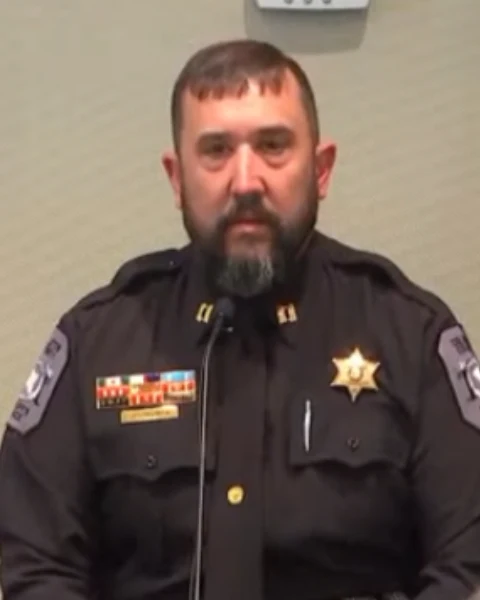
Colleton County investigator who coordinated the initial Moselle scene response before SLED assumed the investigation.
Appeared2023 Murder Trial
356 lines·11 proceedings·8 mentions
About
Jason Chapman, a Colleton County Sheriff's Office captain, coordinated the initial response at Moselle while SLED traveled to the property. He requested that SLED take primary responsibility because of the local department's conflict involving the Murdaugh family. Local officers secured the perimeter, prepared a warrant, protected evidence from approaching rain, and limited collection to a time-sensitive gunshot-residue sample.
On direct examination, Chapman used body-camera footage, photographs, and drone recordings to describe the property and the positions of Paul and Maggie Murdaugh. He testified about standing water near the feed room, a phone on Paul's body, the search for firearms, and his observation that Alex Murdaugh appeared upset but had no blood visible to him. He treated the inability to check Paul's pulse without manipulating the blood-covered body, the ending of the 911 call, and reactions during the tire-impression inquiry as matters for investigation rather than established conclusions.
Chapman also described unidentified tire impressions and footwear impressions near the hangar. He visually compared smoother impressions with Maggie's footwear but acknowledged that he and Detective Laura Rutland took no measurements. Cross-examination established that Chapman did not wear his body camera, was unaware of possible driveway impressions he said he would have preserved, and did not photograph the initially observed smooth footwear impressions before referring them to crime-scene personnel. He could not identify the source of later patterned prints or say whether SLED analyzed a possible muddy impression on Maggie's leg.
After SLED assumed the investigation, Chapman did not receive its investigative information, never entered the main residence, and could not say whether it was searched or subjected to testing proposed by the defense. On redirect, he explained that he inferred the footwear impressions crossed the hangar area, turned, and returned because he saw no comparable impressions continuing beyond the building. Chapman limited his description of the water to the discoloration and straight-line marks he observed.
Trial Record (11)
No proceedings match this filter.